
Inside the $100M+ Home Market: Who's Actually Buying?
Updated May 11, 20266 min read
In January 2019, Ken Griffin paid $238 million for a penthouse at 220 Central Park South — the most ever paid for a home in the United States. The record still stands. But the ground underneath it has shifted dramatically.
Multiple homes have crossed the $100M line every year since. James Jannard sold his Malibu compound for $210 million in 2024. Jay-Z and Beyoncé paid $200 million for a Tadao Ando-designed estate in Malibu in 2023. The Wall Street Journal labeled 2025 the "year of the $100 million house" — all ten of the top US residential transactions that year cleared the nine-figure line. Someone is buying these.
Here's the thing: the $100M+ market isn't really a market. It's a small group of buyers trading a handful of properties in three or four zip codes. According to the Wall Street Journal, around 19 US homes traded above $100M between 2011 and 2020, and at least 24 more have closed since 2020 — meaning roughly 40 to 50 confirmed nine-figure trades in modern US history. The set of buyers capable of playing at this level is similarly small.
We track this stuff every day at BallerCribs, and most people have never seen a nine-figure deal explained clearly. So we're going to pull the curtain back. Who these buyers actually are. The properties they're fighting over. The patterns running through the deals. And what all of it signals about the broader luxury market.
The $100M+ club is smaller than you think
There's a hard limit to how many people can realistically shop for a nine-figure house. Roughly 40 to 50 confirmed US $100M+ residential transactions, total. The modern $100M+ era traces to the early 2010s, when a handful of off-market Malibu and Hamptons trades broke the nine-figure ceiling for the first time.
Globally, the club splits into separate fiefdoms. London, Hong Kong, Monaco, and Dubai each have their own $100M markets with different dynamics and different geopolitics driving them.
In the US, the public data tells half the story. The real number of $100M+ transactions is almost certainly higher than what's been reported — anonymous LLC buyers, fully private deals, and off-market trades that never hit county records with their actual purchase price. This club operates in the shadows on purpose.
Who's actually buying?
Most $100M+ buyers fall into four archetypes.
The American billionaires
Ken Griffin (Citadel), Jeff Bezos, Larry Ellison, Marc Andreessen, Bernard Arnault on his US trips. These are the headline buyers — the ones with the net worth to treat real estate like a portfolio asset.
They don't own a single trophy house — they own a portfolio. Griffin alone has assembled a real estate book valued at roughly $1.5 billion: 220 Central Park South in Manhattan, a 27-acre Palm Beach assembly along Billionaires' Row (now the largest contiguous residential parcel on the island), holdings in Miami and Chicago, and a $122 million London estate near Buckingham Palace. Bezos spent $234 million assembling his Indian Creek compound in Miami — three properties on one walled-off slice of "Billionaire Bunker." These buyers aren't buying houses. They're buying monopolies on the most desirable land in America.
The tech new money
The post-2020 wave. Crypto fortunes that cashed out at the peak, early Facebook/Google/Stripe alumni, founders fresh off massive liquidity events.
This group skews west and south. Bel Air, Malibu, Holmby Hills, the Bay Area, Miami. Newer tech buyers tend to overpay because they're buying trophy assets, not comps. When you want the best view in Malibu, the historical price per square foot stops mattering.
The foreign buyers
International wealth has always parked cash in American real estate. Saudi and Gulf state royals buying through LLCs. Russian oligarchs pre-sanctions. Chinese tech wealth before capital controls tightened.
These buyers almost never appear on a deed. The deal flows through trusts, shell companies, and family offices — sometimes four or five layers deep. They cluster in safe-haven cities: Manhattan, London, Monaco, Palm Beach, Beverly Hills.
The quiet old money
The buyers who never make the news. Industrial heirs, private equity founders, hedge fund principals who value anonymity above everything.
They buy off-market almost exclusively, sometimes ensuring a property never lists publicly at all. These are the hardest deals to track and probably make up a far larger share of the $100M+ market than what shows up in the Knight Frank Wealth Report or any other public dataset.
Where they're buying
The markets with enough inventory to absorb a $100M+ buyer are extremely limited.
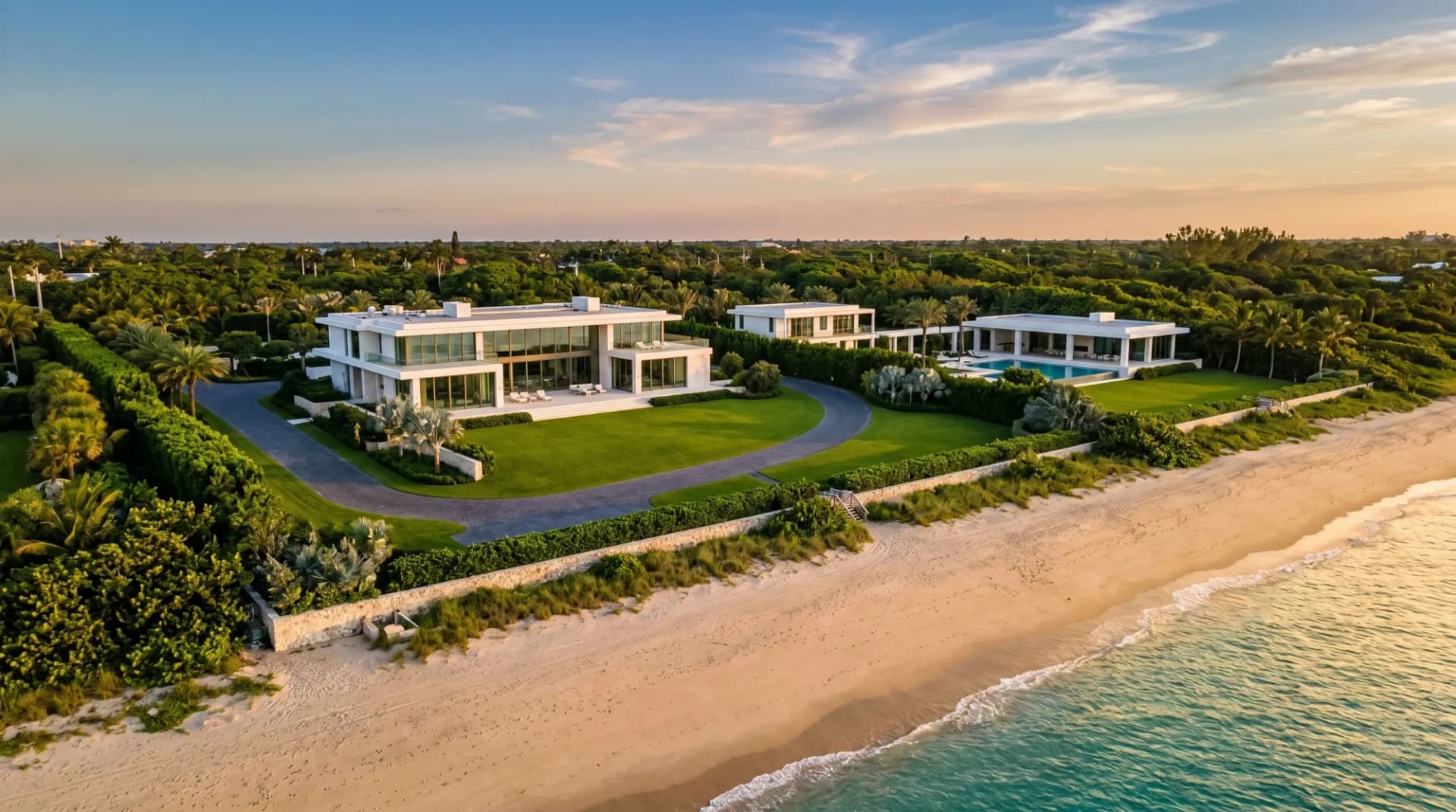
Palm Beach and Miami. The post-2020 boom is real. No state income tax, oceanfront land, and a wave of billionaire migration south. Since 2020, Palm Beach has logged at least six $100M+ trades versus three in Manhattan over the same window — a clean illustration of where the money is moving. Tarpon Island sold for $152 million in 2024. Casa Amado went for $148 million the same year, paid in cash. William Lauder set a record at $155 million for Rush Limbaugh's former oceanfront estate in 2023, then watched that record fall a month later to luxury car dealer Michael Cantanucci at $170 million.
Bel Air, Holmby Hills, Beverly Hills. The traditional trophy market. The Platinum Triangle still holds the highest concentration of nine-figure estates in America.
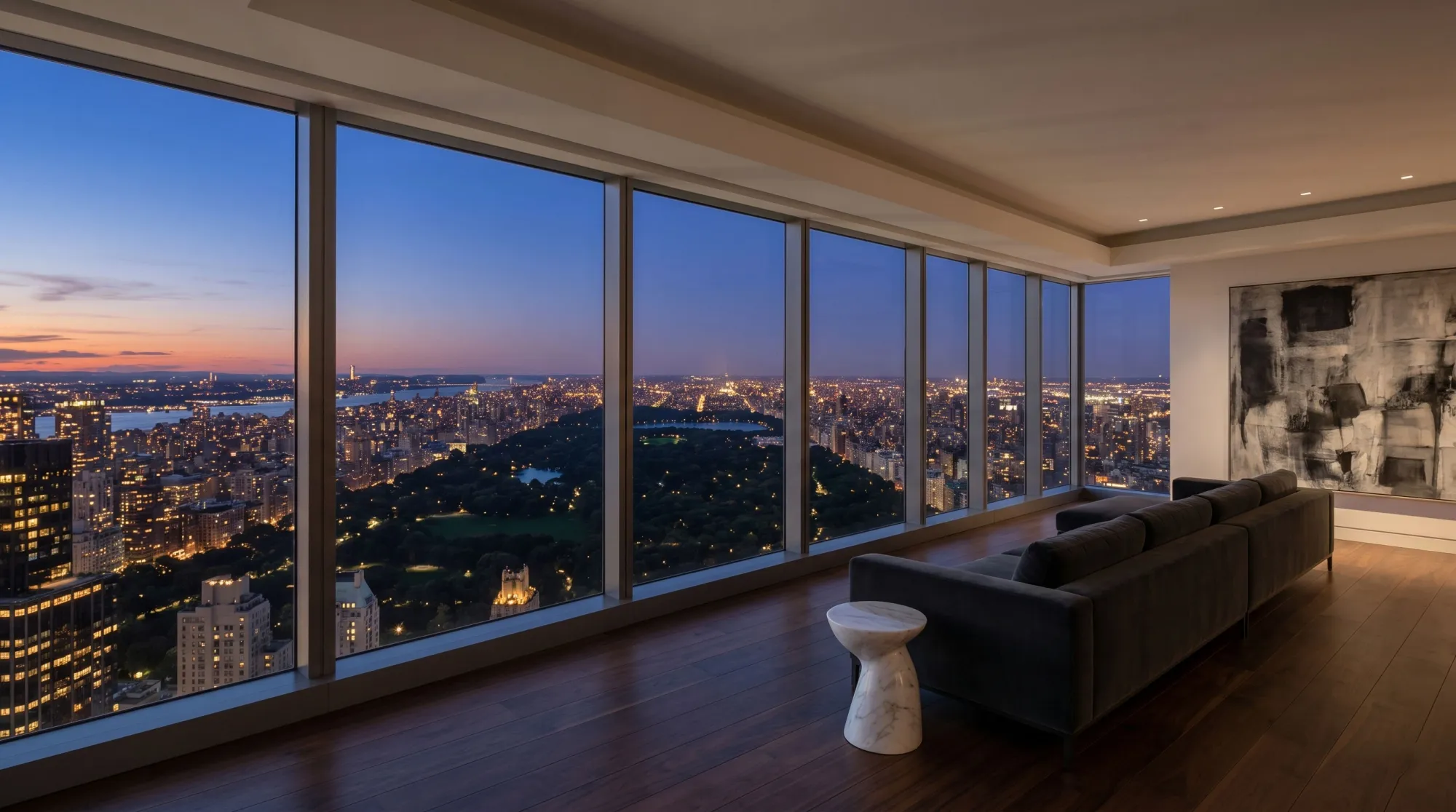
Manhattan. Supply-constrained. The action happens in the sky. Billionaires' Row, 432 Park, 220 Central Park South, plus a handful of Tribeca and West Village townhouses.
The Hamptons. Seasonal, but the oceanfront compounds can match LA on price.
Aspen. A small number of $100M+ compounds have traded here, often entirely off-market.
Malibu. Specifically the oceanfront stretch between Carbon Beach and Paradise Cove. Jannard's record-setting $210M sale closed right on this stretch
The patterns that tell you where the market's going
Five things we see playing out at this tier, and each of them tells you something about what's coming next.
1. Compounds over single homes. Buyers at this level aren't buying a house — they're assembling multi-parcel compounds. Griffin's 27-acre Palm Beach assembly. Bezos's three contiguous Indian Creek lots. They buy the property, then they buy the neighbor's property for privacy, then they buy the lot across the street for control.
2. The shift to Florida. The wealth migration is real and measurable. Palm Beach alone has seen at least double the $100M+ trades of any other US market since 2020. Tax advantages plus lifestyle shift.
3. Anonymous LLCs are standard. Almost every $100M+ deal is structured through at least one LLC. Some run through four or five layers of corporate entities. Privacy isn't optional at this level.
4. Off-market is the default. Many $100M+ transactions never hit the MLS. Most move through a tight network of luxury agents who carry the inventory in their head, not on a public listing site.
5. Cash deals dominate. The vast majority of $100M+ deals close in cash with no financing. When buyers at this tier do use leverage, it's usually private bank lines backed by stock portfolios, not traditional mortgages.
What this means for the broader luxury market
The $100M+ market is the ultimate leading indicator. What trades at $100M today often resets the comps for $20M to $50M properties 18 to 24 months later.
We've watched the total normalization of $50M+ transactions over the past several years. They used to be exceedingly rare. Now multiple trade every quarter in the top markets. The ceiling keeps rising.
The billionaire flight to Florida has measurable downstream effects on the $5M to $20M market in those same zip codes — driving up pricing for everyone underneath the top buyer. You see the same ripple effect at the regional level in markets like Dallas-Fort Worth.
For buyers below the $100M line, watching what happens at the very top helps you time entry on properties at one-tenth the price. The billionaires set the weather. Everyone else just dresses for it. And for the buyers who do reach the top, the sticker price is only the beginning — what a $100M home actually costs to own runs into the millions every year.
Want BallerCribs Weekly?
We track this market every week — the transactions, the off-market whispers, and the estates that trade before they ever list. Subscribe to the newsletter and we'll send it straight to your inbox.
Browsing the 10 most insane mansions on Instagram? Same league of properties, just rentable. Looking at how to book a mansion for your next trip? We've got you. And if you're an agent working in this price bracket, we run featured partner placements for the right listings.
Follow @ballercribs on Instagram for daily drops from the top of the pyramid.
Frequently Asked Questions
What is the most expensive home ever sold in the United States?
Ken Griffin's $238 million purchase of a penthouse at 220 Central Park South in Manhattan, closed in January 2019, remains the most expensive US home sale on record. Multiple homes have crossed the $100 million line every year since, but none have eclipsed Griffin's record.
How many $100 million home sales have happened in the United States?
Roughly 40 to 50 confirmed nine-figure residential transactions in modern US history, per Wall Street Journal data. Approximately 19 closed between 2011 and 2020, with at least 24 more since 2020. The real number is almost certainly higher due to off-market and anonymous LLC trades.
Who buys $100 million homes?
Most ultra-luxury buyers fall into four groups: American billionaires (Griffin, Bezos, Ellison, Andreessen), tech new money from the post-2020 wave, foreign wealth buying through LLCs and trusts, and quiet old money that buys exclusively off-market and rarely appears in public deeds.
Why are billionaires buying so many homes in Palm Beach?
No state income tax, oceanfront land, and a wave of wealth migration from California and the Northeast. Since 2020, Palm Beach has logged at least six $100 million-plus residential trades — roughly double Manhattan's count over the same period — making it the hottest ultra-luxury market in the country.
Are most $100 million home sales public?
No. Many never hit the MLS or get reported with their actual closing price. Most move through a tight network of luxury agents who carry the inventory privately. Buyers structure deals through anonymous LLCs — sometimes four or five layers deep — to keep their identities off public deeds.
BallerCribs Weekly
Get the wildest luxury homes every week — free.
Free forever. Unsubscribe anytime.