
What It Actually Costs to Own a Private Island
Three islands, one price bracket, three completely different annual obligations.
Sep 14, 20269 min read
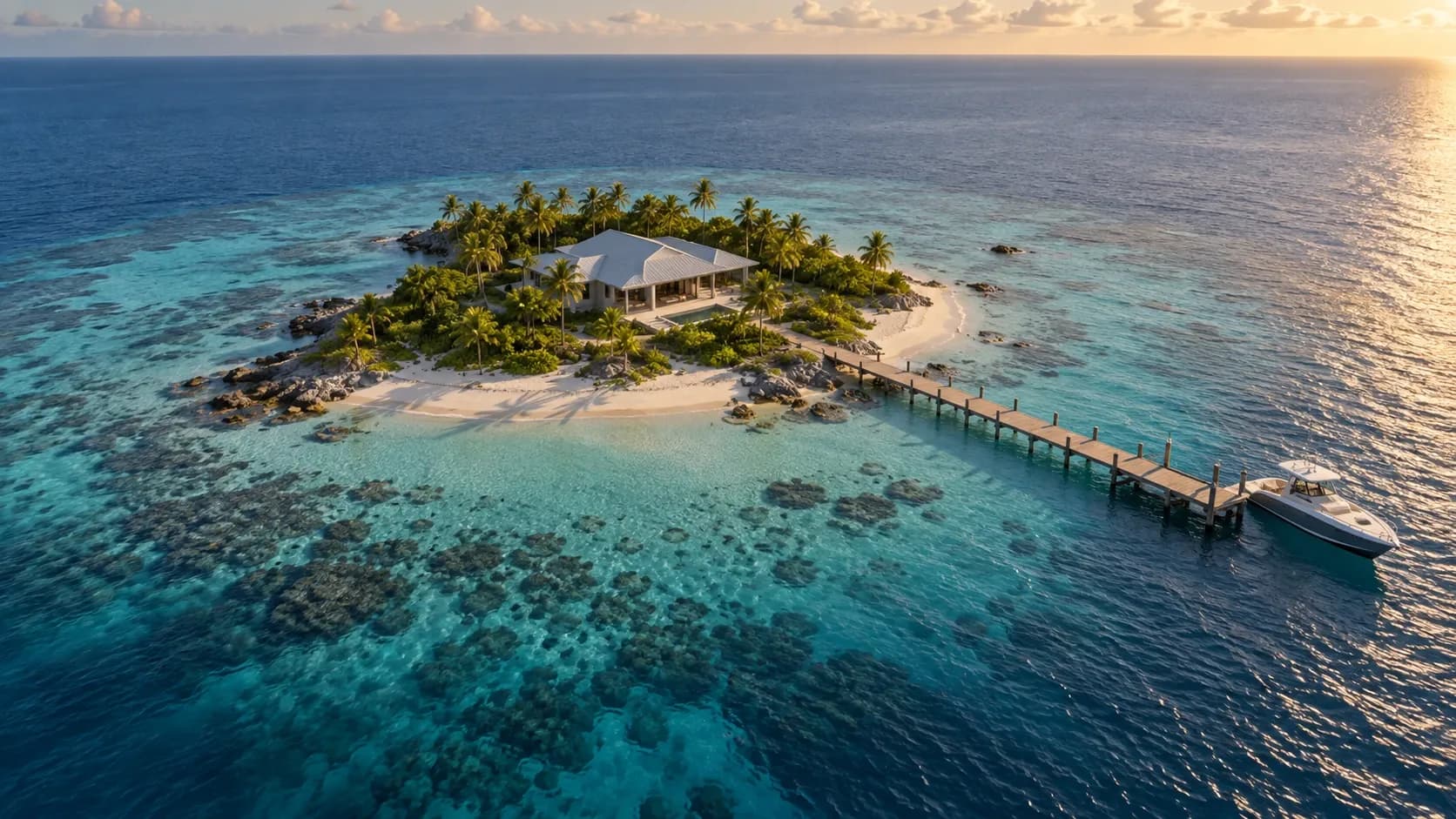
Three private islands are on the market right now within a million dollars of each other. Call it the same money.
One is 10,280 square feet in the Bahamas with seven bedrooms and power piped in from the mainland through an underwater cable.
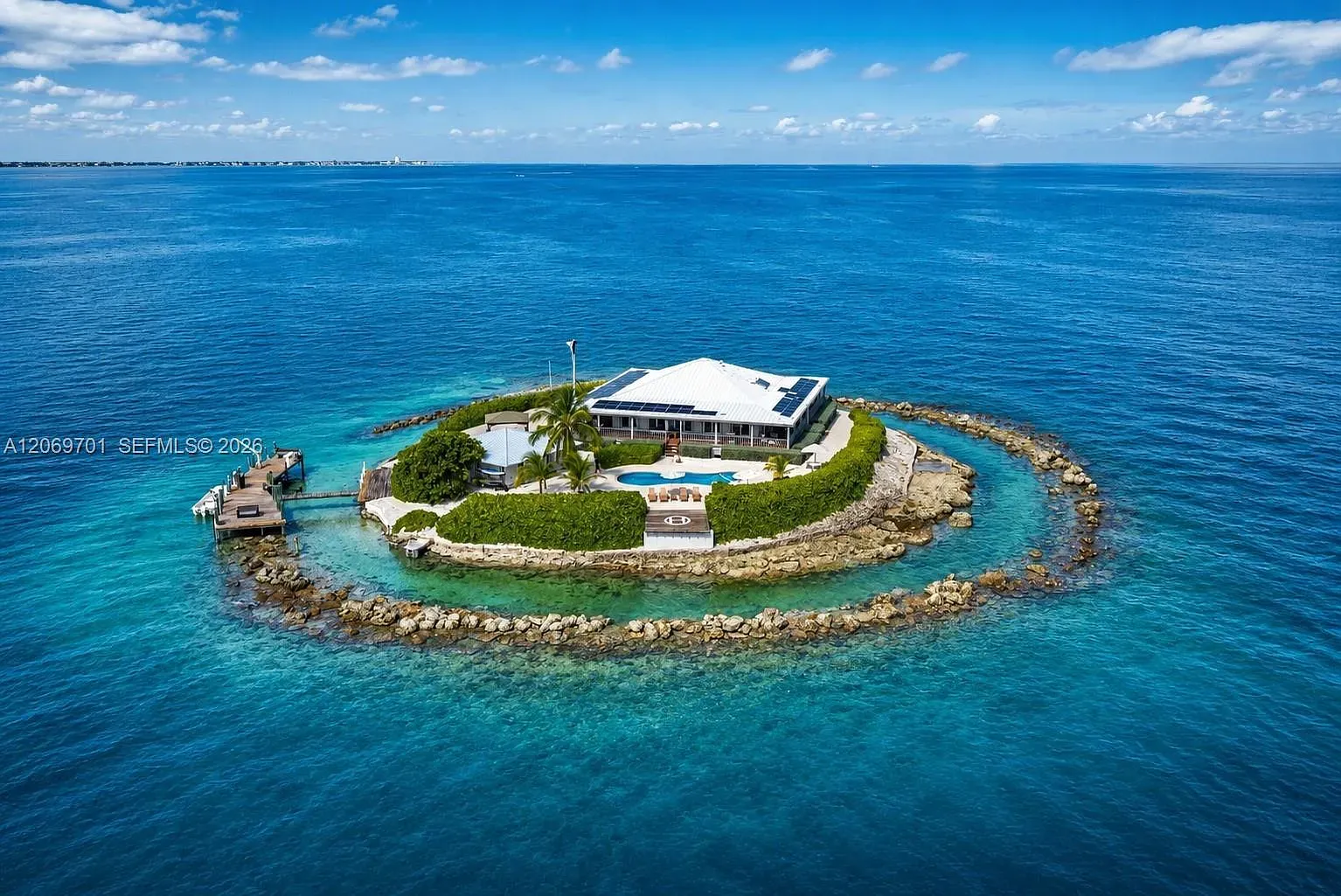
One is 5,000 square feet in the Florida Keys, fully self-sufficient on solar, wind, and a desalination system, with a helipad.
One is 3,352 square feet, also in the Keys, and what it comes with instead of square footage is a barge.
Same price bracket. Three completely different things to own.
This is the part of private island ownership that never makes the listing photos. The purchase price is not what separates these properties, because the purchase price is nearly identical. What separates them is what each one costs to keep, and that number has almost nothing to do with the number on the sign.
The same money, three different assets
Island Oasis | East Sister Rock | Howell Key | |
|---|---|---|---|
Location | Abaco, Bahamas | Marathon, FL | Summerland Key, FL |
Price | $15.9M | $16M | $16.9M |
Living space | 10,280 sq ft | 5,000 sq ft | 3,352 sq ft |
Island size | 5 acres | 6.44 acres | 9.69 acres |
Price per sq ft | $1,547 | $3,200 | $5,042 |
Power | Underwater cable to mainland, backup generator | Solar, wind, battery, backup generator | Fully off-grid solar |
Water | Not specified | Desalination and cistern | Whole-house reverse osmosis |
A 3.3x spread in price per square foot across properties that differ by 6% in price.
If you read that table as a value ranking, Island Oasis wins and it isn't close. Three times the house for less money. But price per square foot is the wrong measure here for the same reason it is the wrong measure on a working farm. You are not buying interior space. You are buying an annual obligation, and the three variables that set it are all visible in that table if you know where to look.
Variable one: is there a cable?
Island Oasis draws power through an underwater cable to the mainland, with a full standby generator behind it.
That single sentence is worth more than any amenity on any of these three properties.
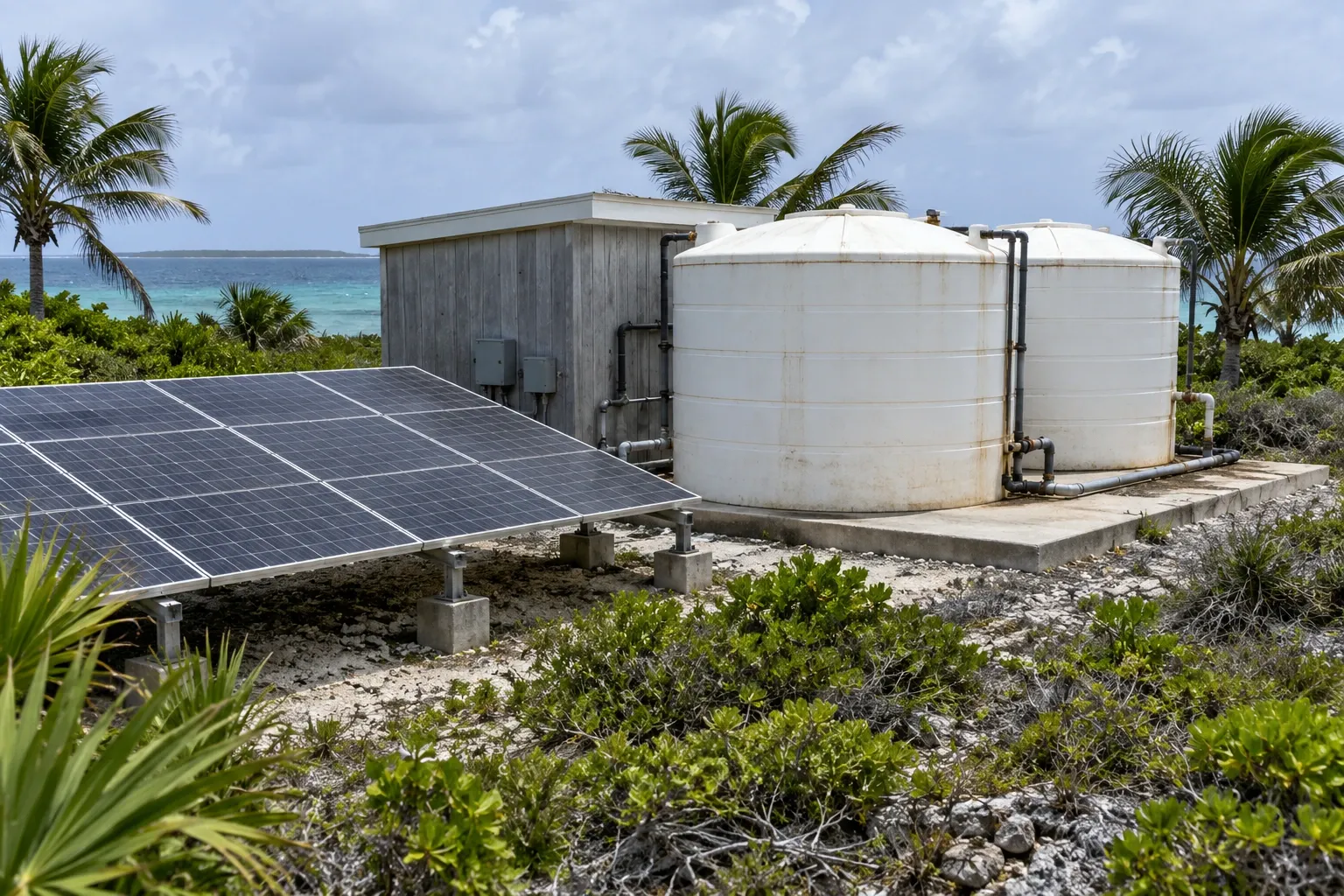
An island without a mainland connection has to build and then maintain its own utility company. Power generation, storage, water production, and waste treatment all become capital equipment that you own, fuel, service, and eventually replace. A complete off-grid setup commonly runs $300,000 or more to install, and generator fuel and service alone can run $1,000 to $5,000 a month depending on load.
A cable removes most of that. It does not remove the backup generator, and it introduces a new failure mode that a solar array does not have, but it converts the largest recurring line on an island budget into a utility bill.
The standout: the cheapest island on this list by price is also the cheapest to run, and it is the one with the biggest house. That combination is rare enough to be worth noticing.
Variable two: how is it built?
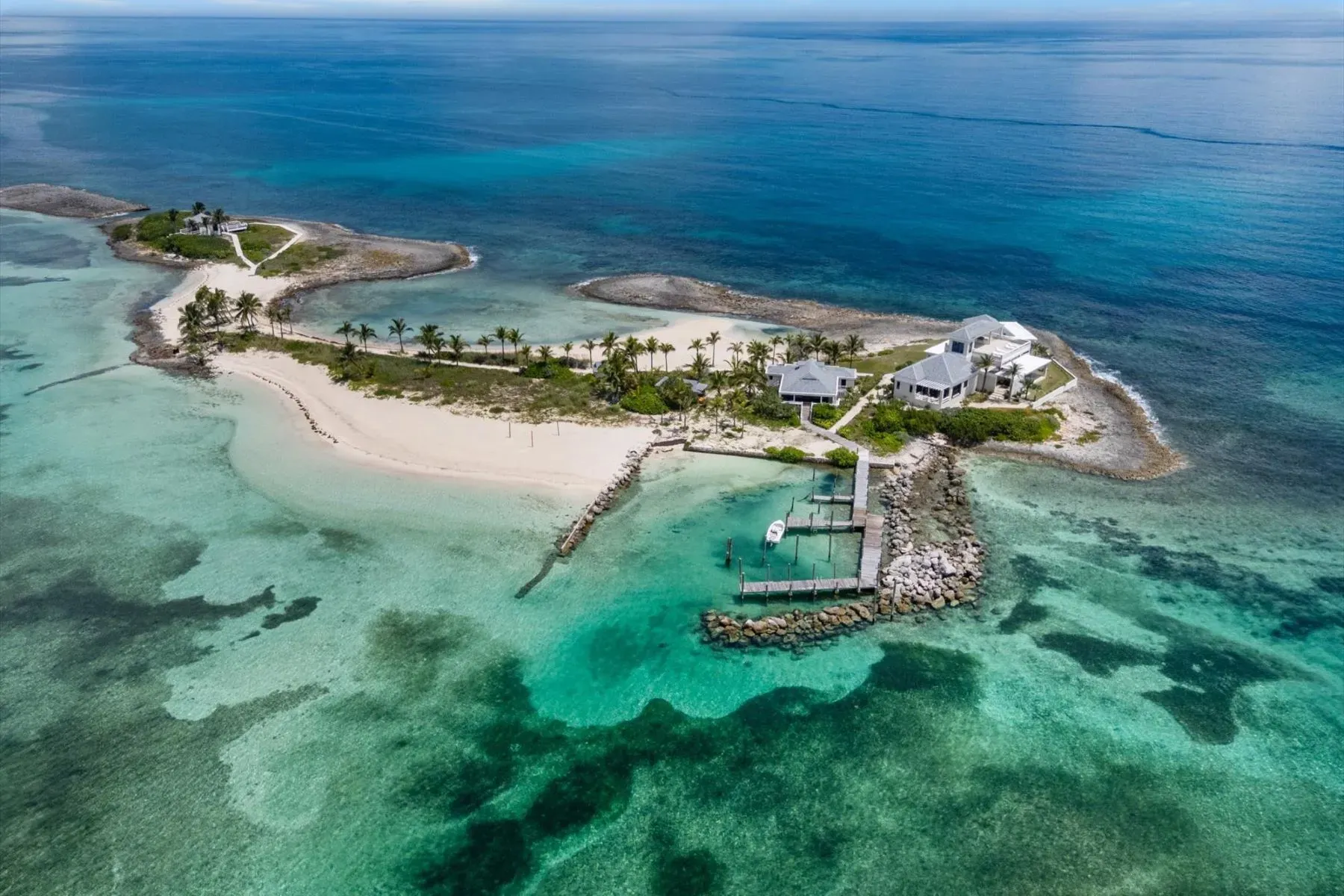
Howell Key is the most expensive per square foot of the three by a wide margin, and the specification sheet explains why.
Structural insulated panel construction. Hardie Board siding. A standing seam metal roof. Impact-rated windows and doors throughout. The whole thing sitting roughly ten feet above base flood elevation.
That is not a luxury spec. It is an insurance spec.
Hurricane-resistant construction is estimated to reduce premiums by 30% to 50%, and in a hurricane zone insurance is not a line item, it is the reason the annual range is so wide. On a $300,000 dwelling policy, the Monroe County average in 2026 runs about $14,850 a year, roughly nine times what the cheapest counties in Florida pay for identical coverage. Scale that to a $2 million single-family home in the Keys and you are looking at $35,000 to $50,000 or more annually, before flood insurance, which is a separate policy entirely. Monroe County also has the fewest active carriers of any county in the state, and the vast majority of properties there carry their wind coverage through Citizens, the state-created insurer of last resort.
Two mechanics people consistently miss:
The hurricane deductible is a percentage, not a dollar figure. It typically runs 2%, 5%, or 10% of dwelling coverage. On $3 million of coverage a 5% deductible means the first $150,000 of storm damage is yours, per event.
Some insurers will not write private islands at all. Where that happens the owner self-insures, which makes the annual number look smaller and the tail risk unbounded.
Against that backdrop, a house engineered to survive the storm is not paying for comfort. It is buying down the single largest variable in the model, every year, for as long as it stands.
Variable three: how does anything get there?
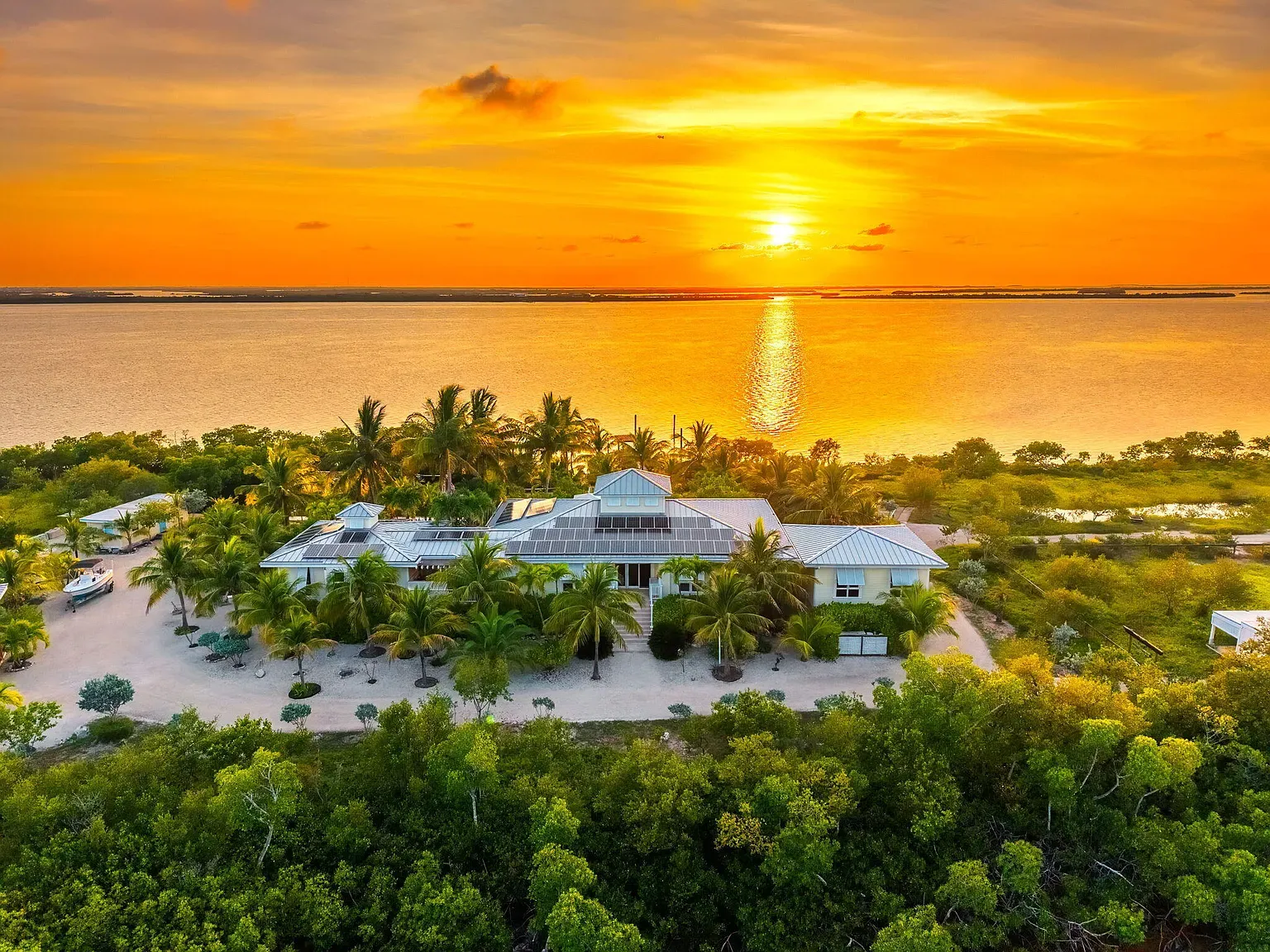
Howell Key's sale includes a barge, a golf cart, a tractor, and a private mainland lot for car storage.
That is the least glamorous sentence in any of these three listings and possibly the most valuable one.
Island construction runs roughly 1.5 to 3 times mainland cost for the same structure, and the reason is entirely logistical. Set that multiple against what building a custom mansion costs on dry land and the gap is the boat. Every board, appliance, and bag of cement arrives by water. Labor has to be transported and often housed on site. Weather stops work without notice. Marine trades like dock and seawall work are specialist and priced accordingly.
An island that comes with its own barge and a place to park a car on the mainland has solved a problem that most island buyers discover in month three. It also tells you something about how the property has been run, which is usually a better signal than anything in the brochure.
Howell Key also carries two building rights. In the Keys, where the Rate of Growth Ordinance rations building permits and supply is effectively fixed, an entitlement to build is a genuinely scarce asset rather than a footnote.
What it actually costs per year
Once an island exists, it costs money whether you visit or not. The pattern is the same one that governs what a $100 million home costs to own, with one difference: on an island there is no utility company, no road crew, and no fire department behind the number. Published ranges for a developed island cluster between roughly $84,000 and $310,000 annually, with the spread driven almost entirely by storm exposure and staffing.
Line item | Annual range |
|---|---|
Property tax | $5,000–$50,000+ |
Insurance | $10,000–$50,000+ |
General maintenance | $30,000–$100,000 |
Caretaker | $24,000–$100,000 |
Boat and transport | $10,000–$30,000 |
Utility system maintenance | $5,000–$20,000 |
Storm damage reserve, hurricane zones | $20,000–$50,000 |
Sources disagree most on the caretaker line, which is also the line owners most often try to delete. Broker guides put it at $24,000 to $60,000. Financial coverage written for buyers rather than sellers puts it at $60,000 to $100,000 once housing and related costs are counted. Plan against the higher number, and note that many insurers expect a full-time caretaker on site as a condition of coverage.
Two more that apply to every saltwater island regardless of price. Salt spray attacks equipment continuously, and one specialist estimate puts annual upkeep on exposed systems at 3% to 7% of replacement value, every year. It is the same tax that makes owning a superyacht a maintenance problem rather than a purchase. And remote material inflation runs ahead of mainland inflation, because everything arrives by boat.
Flagging the sourcing plainly: the installation figures, the annual ranges, and the multiples in this section come largely from private island brokerages and marketplaces. They are the primary trade sources for a small niche, and they are also parties with an interest in how these numbers are framed. Two of them agreeing is not independent corroboration. The Monroe County insurance figures are independent of the island trade and are the firmest numbers here.
Undeveloped islands and the 1.8x problem
Everything above assumes the island already works. If it does not, the listing price is roughly half of what you will spend before you can sleep there.
The trade rule of thumb is that total cost to make an undeveloped island livable runs about 1.8 times the listing price, once closing, power, water, waste, a dock, and a modest house are in. A $2 million island becomes roughly $3.6 million.
System | Typical install cost |
|---|---|
Solar array | £40,000–£80,000 |
Backup generator | £15,000–£30,000 |
Water: desalination, well, or cistern | £10,000–£30,000 |
Waste and sewerage | £20,000–£150,000 |
Satellite connectivity | £5,000–£15,000 |
Dock and marine works | Highly variable, often the largest single line |
Those figures are published in pounds by a UK-based island brokerage and are left in the original currency deliberately, because converting them at today's rate would imply a precision the underlying ranges do not have.
Which is the real argument for buying developed. A finished island looks expensive next to a raw one and usually is not, because the raw one carries the multiple, the construction premium, the permitting, and several years before anyone can stay there.
The cautionary tale is one of these three
East Sister Rock is close to the best-case version of a hurricane-zone island. Concrete construction on pilings drilled directly into coral rock, sitting on an elevated plateau. Solar, wind, battery storage, a backup generator, desalination, a 100-foot deep-water dock, a helipad. Genuinely self-sufficient, a quarter mile from a town with a hospital and an airport.
It has also been on and off the market for more than a decade. Published listing histories put it at $8.5 million in 2016 and $11.7 million in 2021, and national coverage had it at $16.5 million in 2023. It is $16 million today, which means the most recent move was down.
Not because anything is wrong with it. Because the buyer pool for a property with a six-figure annual obligation and no road is genuinely small, and it shrinks further every time insurance renews. At this level a thin public buyer pool is also why so much trophy property moves off-market instead. The engineering is not the constraint. The carry is.
Four questions before you make an offer
Get an insurance quote before the offer is accepted. Not during inspection. On a coastal property the quote can move your annual carrying cost by tens of thousands, and on an island it can come back as a refusal to quote at all. This is the highest-value hour in the process.
Ask what the systems are and how old they are. Solar arrays, batteries, generators, desalination units, and septic systems all have replacement cycles. An island priced as developed with fifteen-year-old infrastructure carries a capital bill that a raw island would at least have made obvious.
Ask who maintains it and what they are paid. If the answer is nobody, price in what deferred maintenance in salt air actually means. If there is a caretaker, assume the real number is higher than the last owner's.
Ask how you get there in an emergency. Not the version with the boat on a calm afternoon. The version at 2 a.m. in weather with someone who needs a hospital. That is also, not coincidentally, most of what the underwriter is thinking about.
The short version
Three islands, one price bracket, and a 3.3x spread in what you get per dollar. The cheapest of the three has the most house and the lowest running cost, because someone ran a cable. The most expensive per square foot has the least house and the best odds of coming through a major hurricane intact, because someone built it properly and threw in the barge.
The price tells you what it costs to buy. Almost nothing else on the listing tells you what it costs to keep, and that is the number that decides whether you still own it in ten years.
If you want the wildest properties on the internet in your inbox every week, free, join the newsletter.
Frequently Asked Questions
How much does it cost to maintain a private island per year?
Published ranges for a developed island cluster between roughly $84,000 and $310,000 a year, and the spread is driven almost entirely by storm exposure and staffing. The recurring lines are property tax, insurance, general maintenance, a caretaker, boat and transport costs, and utility system maintenance. In hurricane zones add a storm damage reserve of $20,000 to $50,000 on top. Those figures come largely from private island brokerages, which are the primary trade sources for a small niche and are not disinterested parties, so treat them as directional rather than precise.
Do private islands have electricity and running water?
Only if someone built the systems or ran a cable. Most islands are not connected to a mainland grid, which means the owner builds and maintains a small utility company: power generation, battery storage, water production, and waste treatment. A complete off-grid setup commonly runs $300,000 or more to install, and generator fuel and service alone can run $1,000 to $5,000 a month. The exception is an island close enough to shore for an underwater power cable, which converts the single largest recurring cost on an island budget into a utility bill.
Why is insurance on a private island so expensive?
Two reasons stack. The first is location: coastal and hurricane-exposed property is expensive to insure anywhere. In Florida, a $300,000 dwelling policy in Monroe County averages about $14,850 a year, roughly nine times what the cheapest counties in the state pay for identical coverage, and Monroe has the fewest active carriers in Florida. The second is the island itself. No fire hydrant, no fire department that can reach it, no road access for an adjuster, and every mechanical system exposed to salt. Some insurers decline private islands entirely, which leaves the owner self-insuring.
Is it cheaper to buy a developed island or build on an undeveloped one?
Usually developed, and the gap is wider than it looks. The trade rule of thumb is that making an undeveloped island livable costs about 1.8 times the listing price once closing, power, water, waste, a dock, and a modest house are in, so a $2 million island becomes roughly $3.6 million. Island construction also runs about 1.5 to 3 times mainland cost for the same structure, because materials arrive by water, labor has to be transported and housed, and weather stops work without notice. A finished island looks expensive next to a raw one and often is not.
What should you check before buying a private island?
Four things, in order of how much money they represent. Get an insurance quote before your offer is accepted rather than during inspection, because on an island it can come back as a refusal to quote at all. Ask what the systems are and how old they are, since solar arrays, batteries, generators, desalination units, and septic systems all have replacement cycles. Ask who maintains the island and what they are paid, and assume the real number is higher than the last owner's. And ask how you reach the mainland in an emergency at night in bad weather, which is also most of what the insurance underwriter is thinking about.
BallerCribs Weekly
Get the wildest luxury homes every week — free.
Free forever. Unsubscribe anytime.