
What Property Taxes Cost on a Luxury Home in Texas
Texas has no income tax. At the top of the market, here is what it collects instead.
Oct 7, 20267 min read
How much are property taxes on a luxury home in Texas? In the City of Dallas, every taxing unit combined comes to about $2.23 for every $100 of taxable value, using the 2025 rates, the latest complete set the county has published. On a $10 million home, that is roughly $222,700 a year before any exemptions.
Texas has no state income tax. This is where it collects instead, and for a luxury home the bill is set by three things: the stacked rate where the house sits, the exemptions and caps that apply to it, and an appraised value that, in a state where sale prices stay private, can sit a long way from what the house would actually sell for.
Here is how each one works at the top of the market, and why the relief most Texans talk about barely touches it.
What a trophy home pays
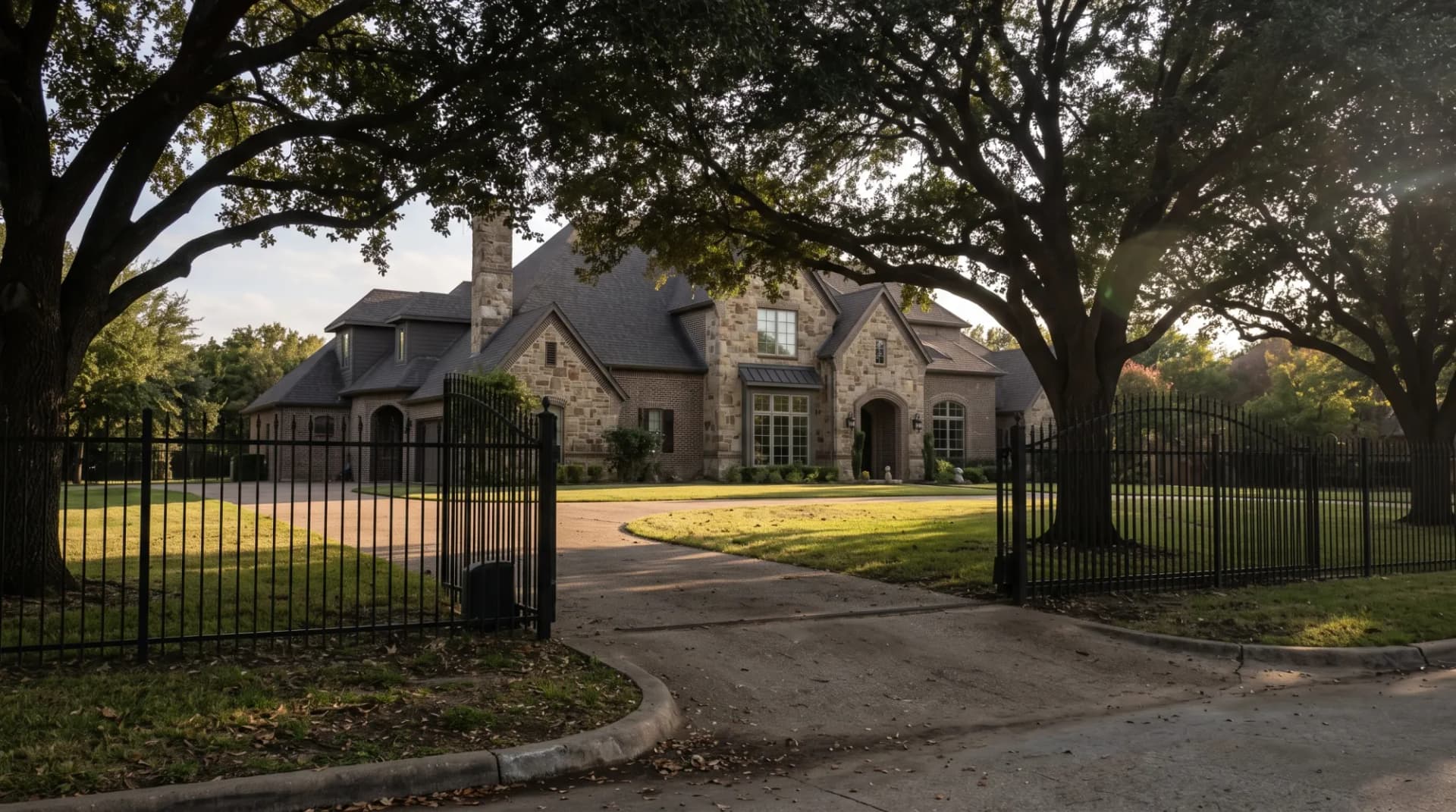
The Crespi Estate in Preston Hollow is listed at $64 million. Its most recent annual tax bill, for 2025, was $802,565, which works out to about $66,880 a month.
Run that bill backward through Dallas's combined rate and it implies a taxable value of roughly $36 million, a little over half the asking price. Hold that gap in mind. It comes back below.
How the rate stacks up
A Texas property tax bill is not one tax. It is a stack of separate taxes, each set by a different local body, each charged per $100 of taxable value.
For a home in the City of Dallas, Dallas County's published 2025 rates are:
Taxing unit | Rate per $100 |
|---|---|
Dallas ISD | $0.9938 |
City of Dallas | $0.6988 |
Dallas County | $0.2155 |
Parkland Hospital | $0.2120 |
Dallas College | $0.1066 |
Combined | about $2.23 |
The school district is the largest line, nearly half the total. That matters more than it looks, because the school district is set by where a house sits, not which city it is in, and two houses a few streets apart can fall in different districts with different rates. Before buying anywhere in North Texas, the first question is which taxing units cover that specific parcel.
The clearest example is a few minutes north of downtown. The Town of Highland Park is surrounded by the City of Dallas, and it has its own city and its own school district. Its combined 2025 rate comes to about $1.57 per $100, roughly 30% below the City of Dallas. On a $10 million home that is about $65,900 a year less, for the land that, as our DFW neighborhood comparison shows, carried the highest price per acre of the nine properties we compared. The most expensive address is not the most expensive to tax.
Most 2026 rates were adopted in September, and together they move the total only a little. Dallas ISD trimmed its rate to $0.9857 and the City of Dallas to $0.6978, while Dallas County raised its rate to $0.2487. With Parkland's 2026 rate still pending, the changes adopted so far add about 2.4 cents per $100, roughly $2,400 a year on a $10 million home.
A $10 million home, worked out
Using those Dallas rates, here is the annual bill on a $10 million home two ways: as a second home with no exemptions, and as a primary residence with a homestead exemption.
Second home | Primary residence | |
|---|---|---|
Dallas ISD | $99,384 | $97,992 |
City of Dallas | $69,880 | $55,904 |
Dallas County | $21,550 | $17,240 |
Parkland Hospital | $21,200 | $21,200 |
Dallas College | $10,658 | $10,658 |
Annual total | $222,672 | $202,994 |
The primary residence column applies the $140,000 school district homestead exemption and the 20% homestead exemptions offered by the City of Dallas and Dallas County. Several other local units commonly offer their own percentage exemptions too, so a real bill can come in lower. Either way, living in the house saves about $19,700 a year, or 9%.
Why the famous exemption barely matters here
Texas voters raised the school district homestead exemption from $100,000 to $140,000 in November 2025, effective from the 2025 tax year. For a typical Texas homeowner it is meaningful relief.
On the $10 million home above, it saves $1,391. That is about six-tenths of one percent of the bill.
The reason is that it is a fixed dollar amount, and a fixed amount shrinks to almost nothing as the home's value climbs. The relief that actually scales at the luxury end is the percentage kind. The 20% city and county exemptions in the example save about $18,300 on the same house, thirteen times what the state exemption does.
So at this price, the question is not whether you get the homestead exemption. It is which percentage exemptions your particular taxing units offer, and many offer none.
The caps, and who they skip
Texas limits how fast a taxable value can rise, but the limits are narrower than most buyers assume.
A homestead is capped at 10% a year. Once a home qualifies as your residence homestead, its taxable value cannot rise more than 10% from one year to the next, even if the market jumps further. The cap protects the owner, not the house: it does not carry over to the next buyer, who starts at full appraised value.
Other property has a temporary 20% cap, but not at luxury prices. Since 2024, Texas has capped annual increases at 20% for real property that is not a homestead, such as second homes. It applies only to property valued at or below a threshold, $5.32 million for 2026, and it expires on December 31, 2026. Bills to extend it were filed in 2025 and none passed, and the legislature does not meet in regular session again until January 2027.
Put those together and a $10 million second home in Texas has no cap at all. Its taxable value can move as far in a year as the appraisal district decides it should.
The appraisal is the real variable
Texas is one of a small number of states that do not require sale prices to be disclosed to the public or to the appraisal districts that value property. Districts work from the market data they can gather, and at the top of the market there is very little of it: few comparable sales, many of them private, and houses with no real peers.
The result is a well-documented pattern. High-end homes tend to be appraised at a lower share of their market value than ordinary homes, partly because there is so little to compare them to and partly because their owners are more likely to protest. A 2026 analysis of how non-disclosure affects valuations points to research in Austin finding that, from 2014 to 2023, the least expensive homes were taxed at 1.31 times the rate of the most expensive ones.
That is the gap in the Crespi numbers. A taxable value near $36 million against a $64 million asking price is not proof of under-appraisal, because an asking price is not a sale and that house has not sold. But it shows how far apart the number a buyer pays and the number a tax bill uses can drift.
Two practical consequences follow. The current owner's tax bill is a poor guide to yours, because your purchase can prompt a reassessment, and any homestead cap they built up does not transfer. And protesting the appraisal every year is normal at this level, not adversarial. The deadline is generally May 15, or 30 days after the appraisal notice arrives if that is later.
Agricultural valuation: the acreage lever
For property with real land, the largest potential reduction has nothing to do with exemptions. Texas allows qualifying land to be appraised on its agricultural productivity rather than its market value, which on valuable acreage can cut the taxable value of the land dramatically.
It is not automatic, and it is not a loophole. The land generally has to have been devoted principally to agricultural use for five of the preceding seven years, and land inside city limits faces a stricter continuous-use test. If the use ever stops, a rollback tax recaptures the difference between what was paid and what market-value taxes would have been, for the previous three years.
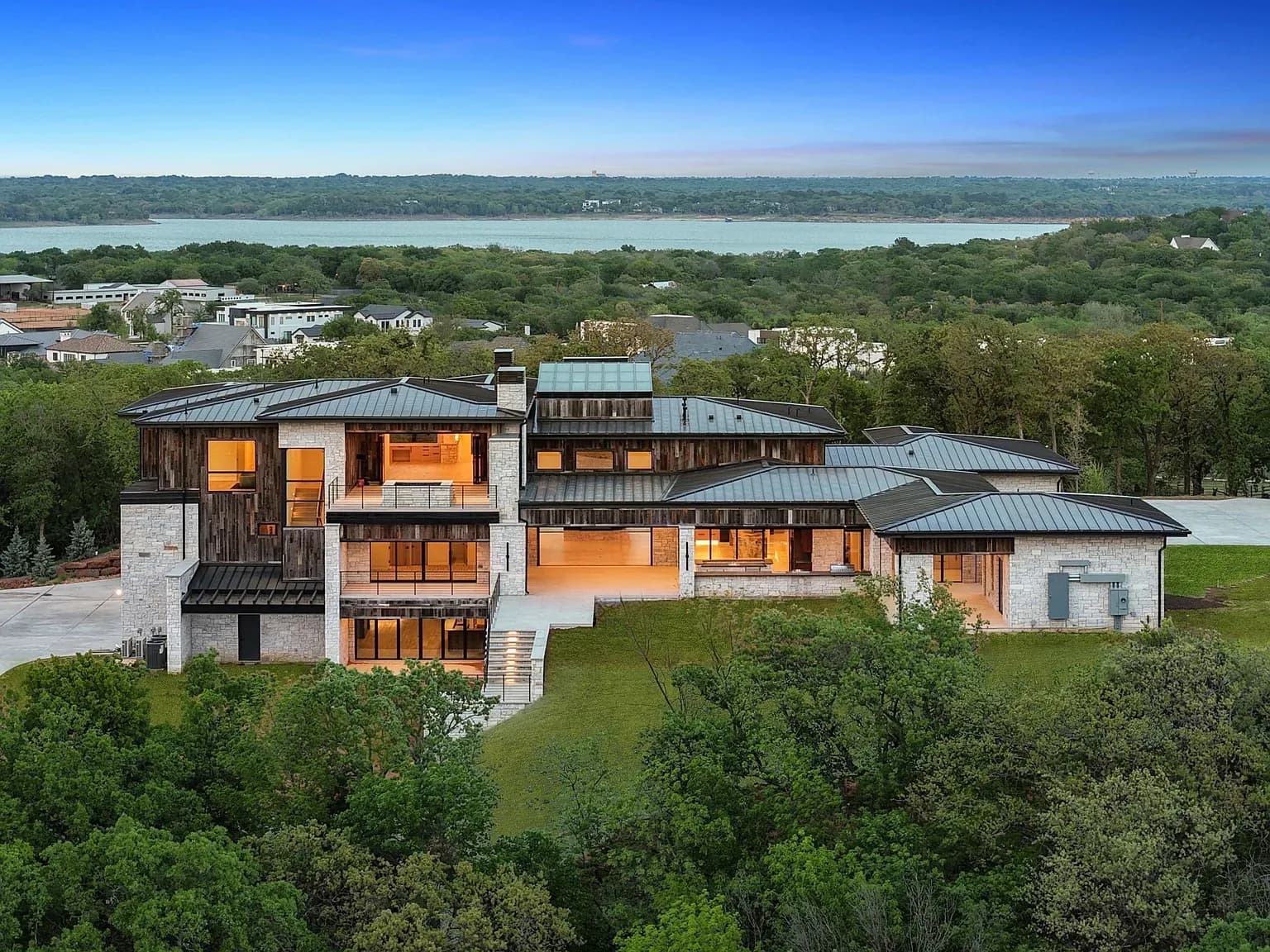
Summit of Southlake, on 8.69 acres, is a good example of how listings handle this. Its marketing describes the land as eligible for an agricultural exemption. Eligible and in place are different things, and only the second one changes the bill. Ask the appraisal district for the property's current status and its use history before you price it into an offer.
What to check before you buy
Which taxing units cover the parcel. The school district especially. It is half the bill and it is set by the address, not the city name.
Whether you will claim a homestead. It decides the cap you get and which exemptions apply. A second home gets neither.
The appraised value, not the seller's tax bill. Look up the current appraisal, then assume your purchase could reset it.
Which percentage exemptions your units offer. At this price they are worth far more than the state's fixed exemption.
Agricultural status, in writing. Current valuation, use history, and what would trigger a rollback.
Land and location drive what a Texas home costs to buy. Property tax is what it costs to keep, every year, for as long as you own it.
If you want the wildest homes on the internet in your inbox every week, free, join the newsletter.
This article is general information, not tax or legal advice. Rates, exemptions, and deadlines change every year and vary by property, so confirm the details for any specific property with its appraisal district or a tax professional.
Frequently Asked Questions
How much are property taxes on a $10 million home in Texas?
In the City of Dallas, using Dallas County's published 2025 rates, a $10 million home owes about $222,700 a year before exemptions, at a combined rate of about $2.23 per $100 of taxable value. As a primary residence with the homestead exemptions offered by the City of Dallas and Dallas County, it comes to about $203,000. Rates differ by city and school district, so the same house in another taxing area can owe tens of thousands of dollars more or less.
Why does Highland Park have lower property taxes than Dallas?
Highland Park is its own town with its own school district, so it levies a different stack of rates than the City of Dallas that surrounds it. Its combined 2025 rate comes to about $1.57 per $100, roughly 30% below the City of Dallas, which on a $10 million home is about $65,900 a year less.
Does the Texas homestead exemption help on a luxury home?
The state's school district exemption helps very little at the top of the market. It rose to $140,000 starting with the 2025 tax year, and on a $10 million Dallas home it saves about $1,391, roughly 0.6% of the bill. Percentage exemptions offered by some cities and counties scale with value and matter far more: in Dallas, the 20% city and county homestead exemptions save about $18,300 on the same home.
Is there a cap on property tax increases for second homes in Texas?
Only below a value threshold, and only through the end of 2026. Texas caps annual increases in taxable value at 20% for property that is not a homestead and is valued at or below $5.32 million for 2026, and that cap expires on December 31, 2026. A luxury second home above the threshold has no cap at all. Primary residences have a separate 10% annual cap, which does not transfer to the next buyer.
Can agricultural valuation lower property taxes on a luxury estate?
It can, substantially, on qualifying acreage, because the land is appraised on its agricultural productivity rather than its market value. The land generally must have been devoted principally to agricultural use for five of the preceding seven years, with a stricter continuous-use test inside city limits, and if that use stops, a rollback tax recaptures the difference for the previous three years. A listing that describes land as eligible does not mean the valuation is in place, so confirm the current status with the appraisal district.
BallerCribs Weekly
Get the wildest luxury homes every week — free.
Free forever. Unsubscribe anytime.