
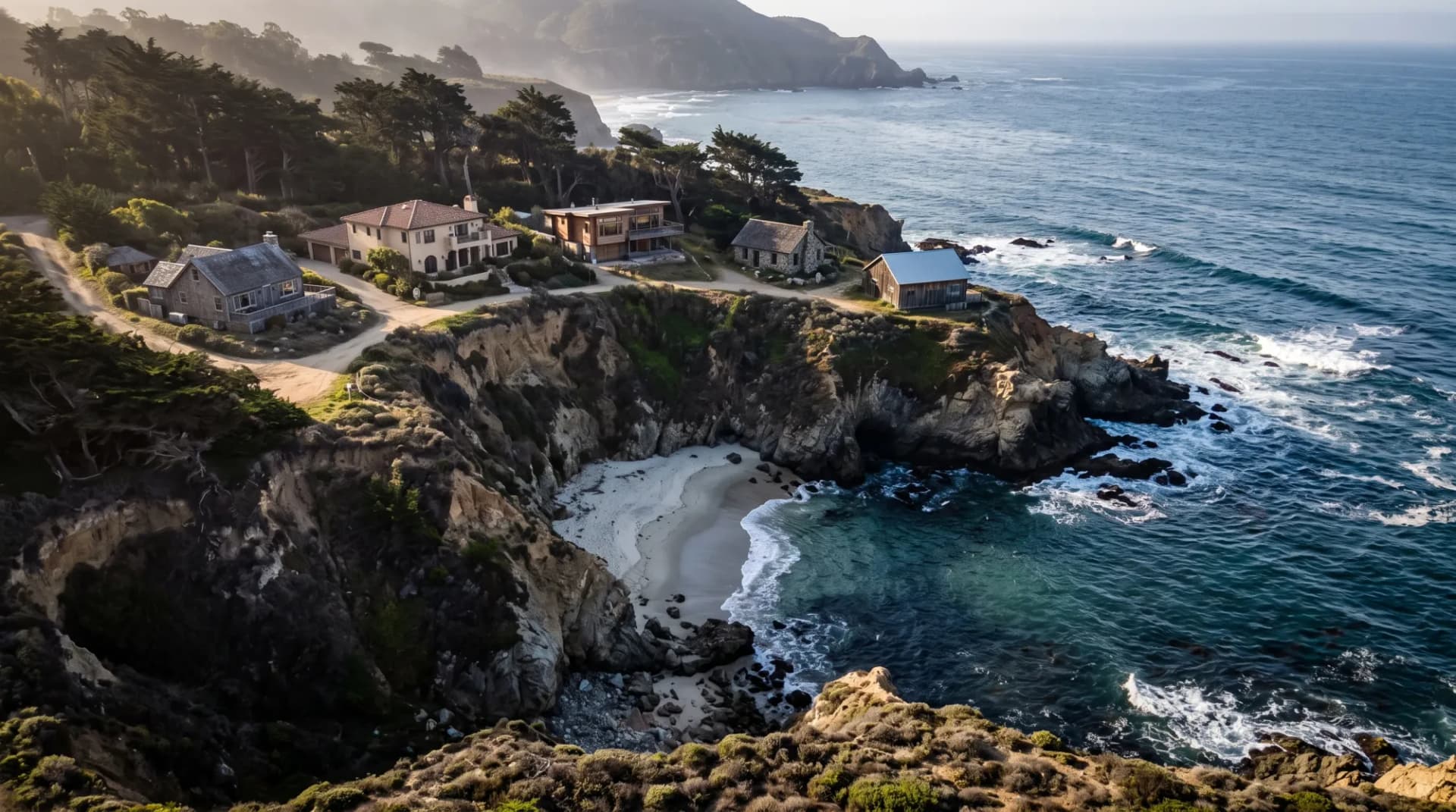
What Actually Sets the Price of a Waterfront Estate
Five properties on the water. The house is the part you can price. The shoreline is the part that sets the number.
Sep 22, 20267 min read
Two houses, both on the water, both for sale right now.
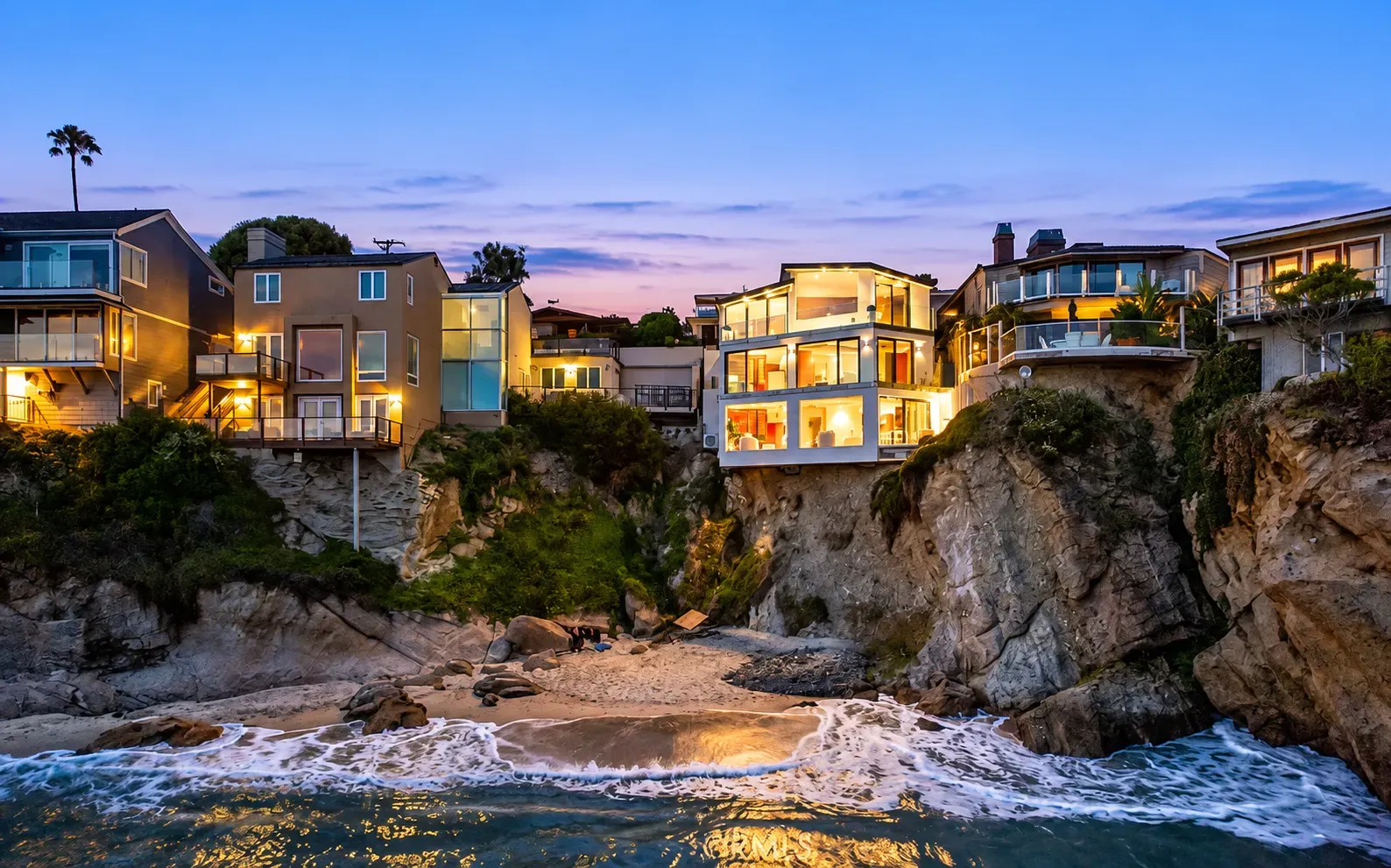
The first is in Laguna Beach. Four bedrooms, 2,777 square feet, sitting on 0.15 acres. It costs $12.49 million.
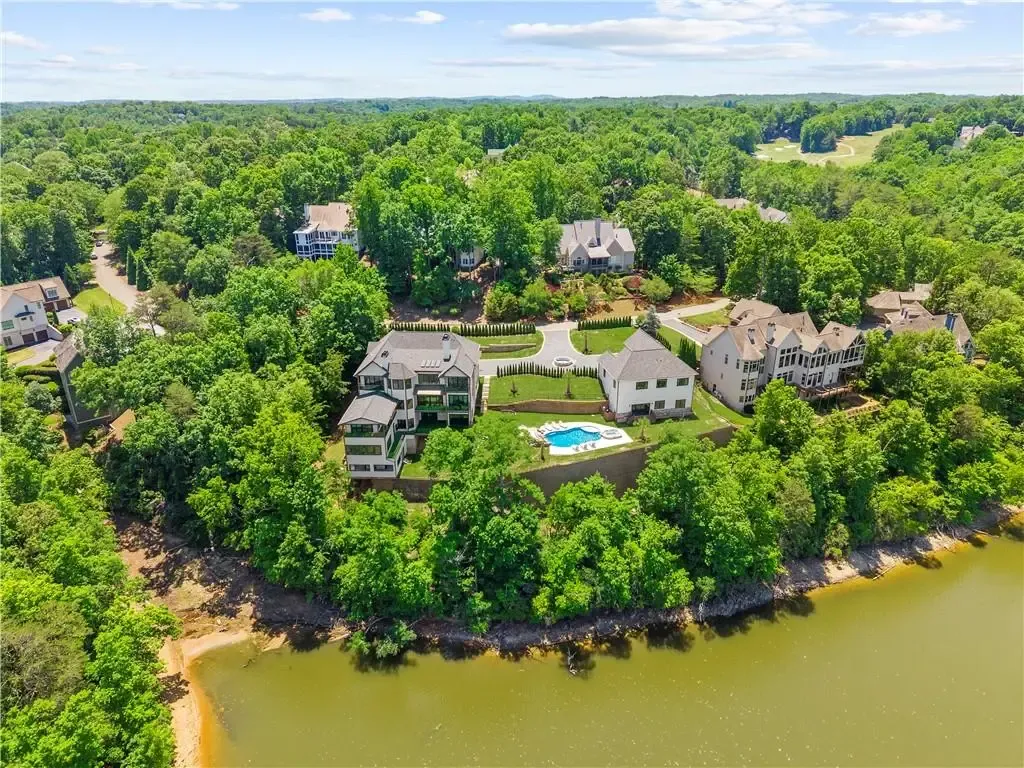
The second is on Lake Lanier in north Georgia. Seven bedrooms, 15,860 square feet, a regulation bowling alley, a theater, a spa, a 3,000-square-foot pool house, and a 40-foot heated pool with a grotto and a waterfall. It costs $3.3 million.
The Georgia house is 5.7 times the size for 26% of the money.
Neither price is wrong. They are measuring completely different things, and the thing they are measuring is not the house.
Five waterfronts, one table
Property | Water | Price | Size | Lot | Price per sq ft |
|---|---|---|---|---|---|
Gull House, Laguna Beach, CA | Open Pacific | $12.49M | 2,777 sq ft | 0.15 acres | $4,498 |
Menemsha Pond, Chilmark, MA | Protected saltwater pond | $45M | 14,780 sq ft | 4.9 acres | $3,045 |
Sandcastle on the Gulf, Belleair Beach, FL | Gulf beachfront | $35M | 19,578 sq ft | 1.18 acres | $1,788 |
Rockyledge, Swampscott, MA | North Atlantic granite | $13.99M | 14,657 sq ft | 0.96 acres | $955 |
Lake Lanier Compound, Dawsonville, GA | Freshwater reservoir | $3.3M | 15,860 sq ft | 0.92 acres | $208 |
A 21.6x spread in price per square foot, across five houses that a listing site would file under the same heading.
The word "waterfront" is doing almost no work in that table. What separates these five is how much of that particular shoreline will ever exist, and whether you can put a boat on it.
Scarcity is the whole price
A reservoir has as much shoreline as the water level allows. Lake Lanier has 692 miles of it. When the supply of a thing is effectively unlimited, the thing stops being what you are paying for, and the price collapses back to what the house itself is worth. Hence $208 a square foot, which is a number about building rather than a number about water.
Woods Cove in Laguna Beach is the opposite. It is a single small cove on a coastline that the State of California has spent fifty years making harder to build on. The number of houses that will ever sit above that cove is fixed, and it was fixed a long time ago. There is no version of the future with more of them.
That is the entire gap between $208 and $4,498.
The tell is in the lot sizes. Gull House sits on 0.15 acres, a sixth of the land under the Georgia compound, and costs nearly four times as much. You are not buying the ground. You are buying the fact that nobody else can have it.
The dock is worth more than the house
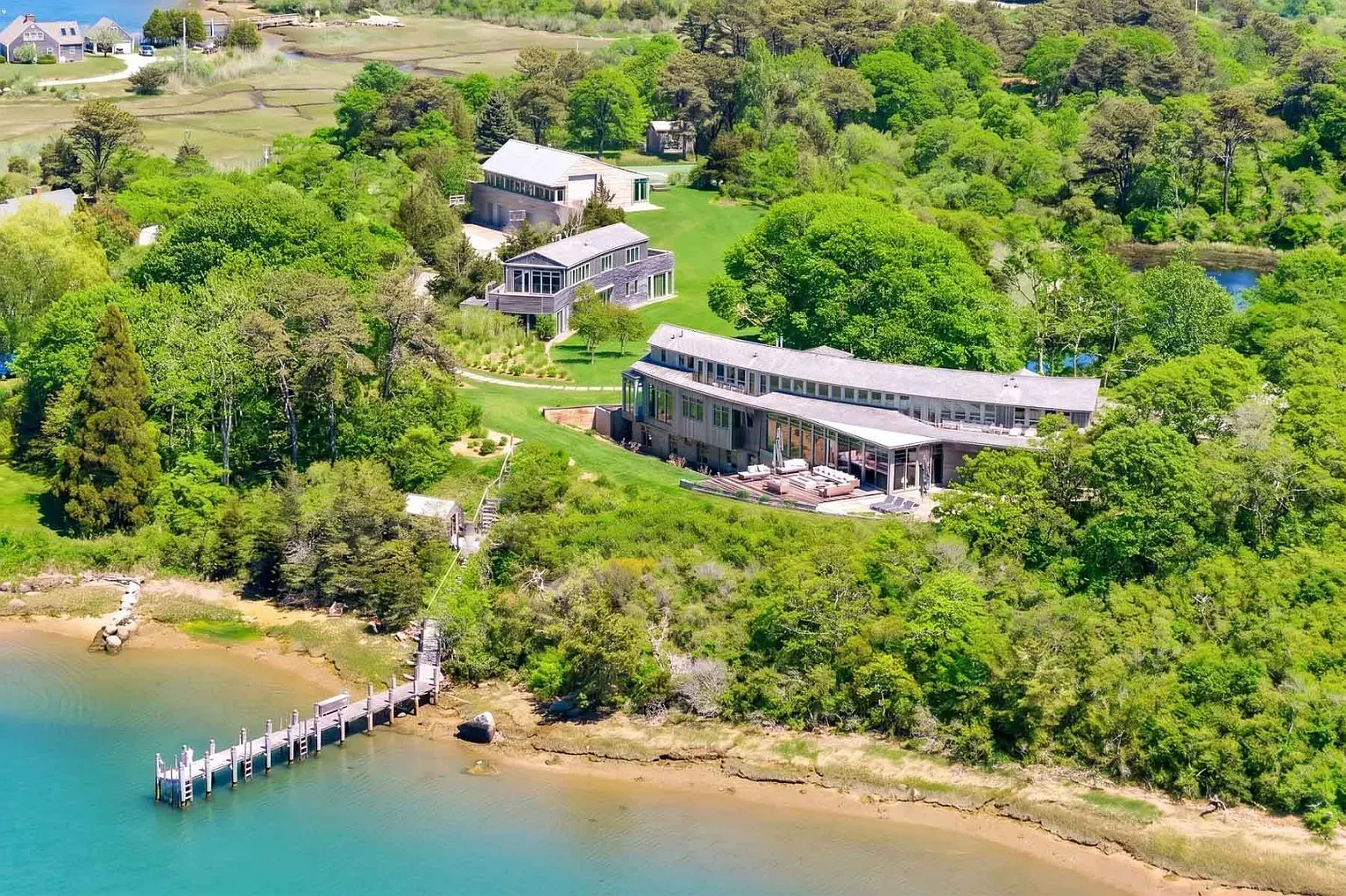
The clearest evidence in the set is a pair of Massachusetts properties that are nearly identical on paper.
Rockyledge in Swampscott is 14,657 square feet on 0.96 acres. The Menemsha Pond compound in Chilmark is 14,780 square feet on 4.9 acres. Less than 1% apart in living space. Both saltwater, both Massachusetts, both serious construction.
Rockyledge is $13.99 million. Menemsha is $45 million. A 3.2x difference for the same amount of house.
Part of that is Martha's Vineyard, and part of it is five acres against one. But the largest single difference is in the specs and it is easy to skim past: Menemsha has a 115-foot private deep-water dock with a boathouse. Rockyledge sits on a granite cliff, which is spectacular, and which you cannot moor a boat to.
Deep water at your own property is the scarcest thing in waterfront real estate, and it is scarce for reasons that have nothing to do with the seller. It requires water deep enough at low tide, a shoreline you can legally build a structure on, and a permit from whichever combination of state, federal, and local agencies claims jurisdiction over that stretch. Any one of those can be a hard no, and the rules tightened almost everywhere over the last two decades. That is a general description of how dock permitting works rather than a citation for any specific jurisdiction, and the answer for a given property is a question for a local marine contractor.
The practical consequence: a house with a legal deep-water dock is not a house with an amenity. It is a house holding a permission that a neighbor may not be able to obtain at any price.
The compound that proves the point
Lake Lanier is not a bad property. Read the specs and it is arguably the most house on this list.
Two structures joined by a 40-foot heated pool with a rock slide, a grotto, and a waterfall. Four levels served by an elevator. A regulation bowling alley, a theater, a gym, a bar, and a spa with a massage room and steam shower. A pool house over 3,000 square feet with its own three-car garage. Seven bedrooms, including a second primary suite on the main level.
At $3.3 million it is, by any measure of building, the best value in the table by an enormous margin.
And then there is one line in the specs: the covered dock slip is three homes away.
Not on the property. Three houses down. Which is the honest summary of what a reservoir shoreline is worth, and why the Georgia house is priced as a very good house rather than as waterfront.
Where the exceptions live
Two properties in the table complicate the story, and they are the useful ones.
Sandcastle on the Gulf is the most expensive house here in absolute terms at $35 million, and the second cheapest per square foot at $1,788. It has 200 feet of private beachfront across three lots in Belleair Beach, a bowling alley, a lazy river running through the pool, and a separate 5,000-square-foot guest house.
The reason it prices where it does is that Gulf-front barrier island property in Pinellas County exists in quantity. Miles of it. It is expensive, it is beautiful, and it is not scarce the way a Laguna cove is scarce. See the full listing.
Rockyledge is the inverse. At $955 a square foot it is the cheapest coastal property on the list, on just under an acre of granite coastline north of Boston, with an ocean-facing infinity pool, a rooftop deck, four fireplaces, 21-zone radiant heat, and a backup generator. The granite that makes the setting is the same granite that prevents a dock, and the North Shore is a market where oceanfront supply is real. See the full listing.
There is a third category worth naming that is not in this table at all: the dredged canal. Much of coastal South Florida is waterfront that was manufactured, cut out of wetland with a dredge over the course of the twentieth century so that a developer could sell twice the lots. Those properties are genuinely on the water and genuinely dockable, and they price well below natural shoreline because everyone understands, at some level, that the supply was created rather than found.
What actually drives the number
Five questions, roughly in order of how much money they represent.
How much of this shoreline can ever exist? Count the parcels, then ask what the local coastal rules would allow to be built today. In most desirable coastal markets the answer is "far less than what is already there," which is why existing waterfront trades at a premium to anything new.
Can you dock a boat, legally, at this property? Not "is there water." Is there a permitted structure, or a realistic path to one. This is the single largest swing factor in the table above and it is frequently invisible in the listing.
Is the water in front of the house natural or made? Both are waterfront. Only one is finite.
What is the flood zone, and what does the insurance actually cost? Get a real quote before the offer is accepted rather than during inspection. On coastal property it can move the annual carrying cost by tens of thousands, and the same logic that governs what it costs to own a private island applies in a milder form to anything on salt water.
What does the shoreline itself require? Seawalls, bulkheads, revetments, and beach nourishment are capital items on a replacement cycle, and they belong in the same mental column as the roof. A granite cliff needs nothing. A sand beach and a seawall are ongoing obligations, and they sit alongside the other carrying costs that make a trophy property's annual number so much larger than buyers expect.
The short version
The house is the part you can see and the part you can price. Square footage, finishes, and amenities all behave predictably and they are all replaceable.
The shoreline is the part that sets the number, and it behaves nothing like the house. It cannot be added to, it usually cannot be improved, and in the markets where it is genuinely finite it will keep pulling away from the cost of the building standing on it.
Which is why $3.3 million buys a bowling alley and $12.49 million buys four bedrooms above a cove, and why both of those are, in their own market, exactly the right price.
If you want the wildest properties on the internet in your inbox every week, free, join the newsletter.
Frequently Asked Questions
How much does waterfront add to a home's price?
There is no single premium, which is the main thing to understand. Across five waterfront properties on the market now, price per square foot ranges from $208 on a Georgia reservoir to $4,498 above a Laguna Beach cove. That is a 21.6x spread on houses a listing site would file under the same heading. What sets the number is how much of that particular shoreline can ever exist and whether the property has legal deep-water access, not the fact of being on water.
Why is lakefront property so much cheaper than oceanfront?
Usually because there is far more of it. Lake Lanier in Georgia has 692 miles of shoreline. A single cove in Laguna Beach has a fixed number of parcels above it that was settled decades ago and cannot grow. When supply is effectively unlimited the price falls back toward what the house itself is worth, which is why a 15,860 sq ft lake compound with a bowling alley can sell for a quarter of what a 2,777 sq ft house on the Pacific costs.
Does a private dock add value to a waterfront home?
It is often the single largest factor. Two Massachusetts properties currently listed are within 1% of each other in living space, 14,657 sq ft and 14,780 sq ft, and are priced at $13.99M and $45M. Acreage and location explain part of that, but the larger property has a 115-foot private deep-water dock and the other sits on a granite cliff that cannot be docked. A legal dock requires deep water at low tide, a shoreline you can build on, and permits from whichever agencies claim jurisdiction, so it is a permission a neighbor may not be able to obtain at any price.
What should you check before buying a waterfront home?
Five things, in order of money at stake. How many parcels of this shoreline can ever exist under current coastal rules. Whether you can legally dock a boat, meaning a permitted structure rather than just water. Whether the waterway is natural or dredged, since both are waterfront but only one is finite. What flood insurance actually costs, quoted before the offer is accepted rather than during inspection. And what the shoreline itself requires, since seawalls, bulkheads, and beach nourishment are capital items on a replacement cycle.
BallerCribs Weekly
Get the wildest luxury homes every week — free.
Free forever. Unsubscribe anytime.