
What It Really Costs to Own a Luxury Home in Florida
No state income tax. The bill arrives every year instead.
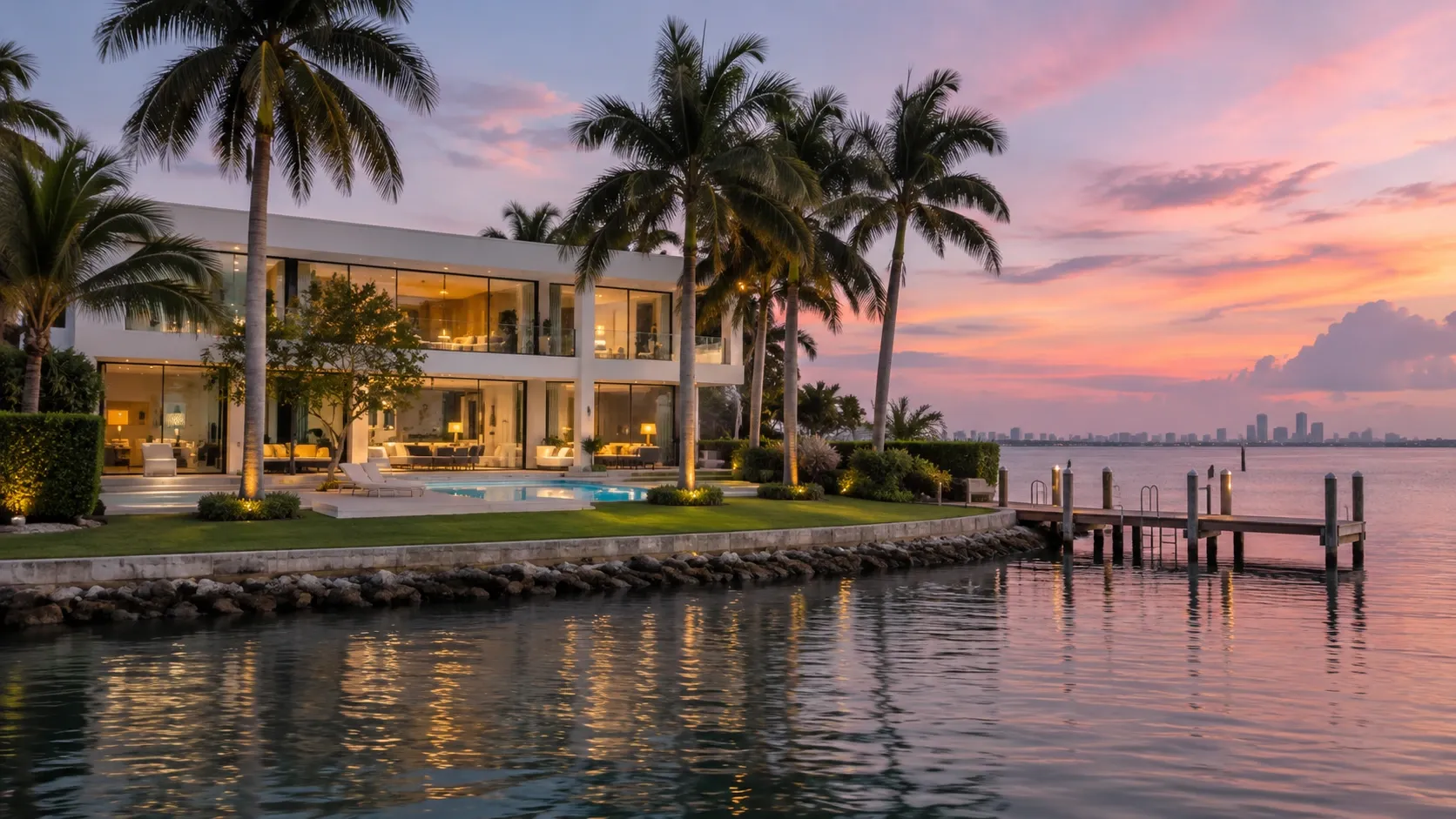
How much does it cost to own a luxury home in Florida? On a $29 million house in Miami Beach, Florida takes $174,000 when the deed is recorded, then about $544,000 a year in property tax if it is a second home. Florida has no state income tax, so for a homeowner the big costs come at closing and on the annual property tax bill. On the coast, insurance adds a third cost that is harder to pin down than either.
Florida voters also just changed the rules. Amendment 3, approved on November 3, 2026 with 62% of the vote, raises the homestead exemption and tightens the cap on how fast a second home's taxable value can rise. Both take effect January 1, 2027.
Here is how each cost works at the top of the market, and which of the new rules actually move the number.
A $29 million house, worked out
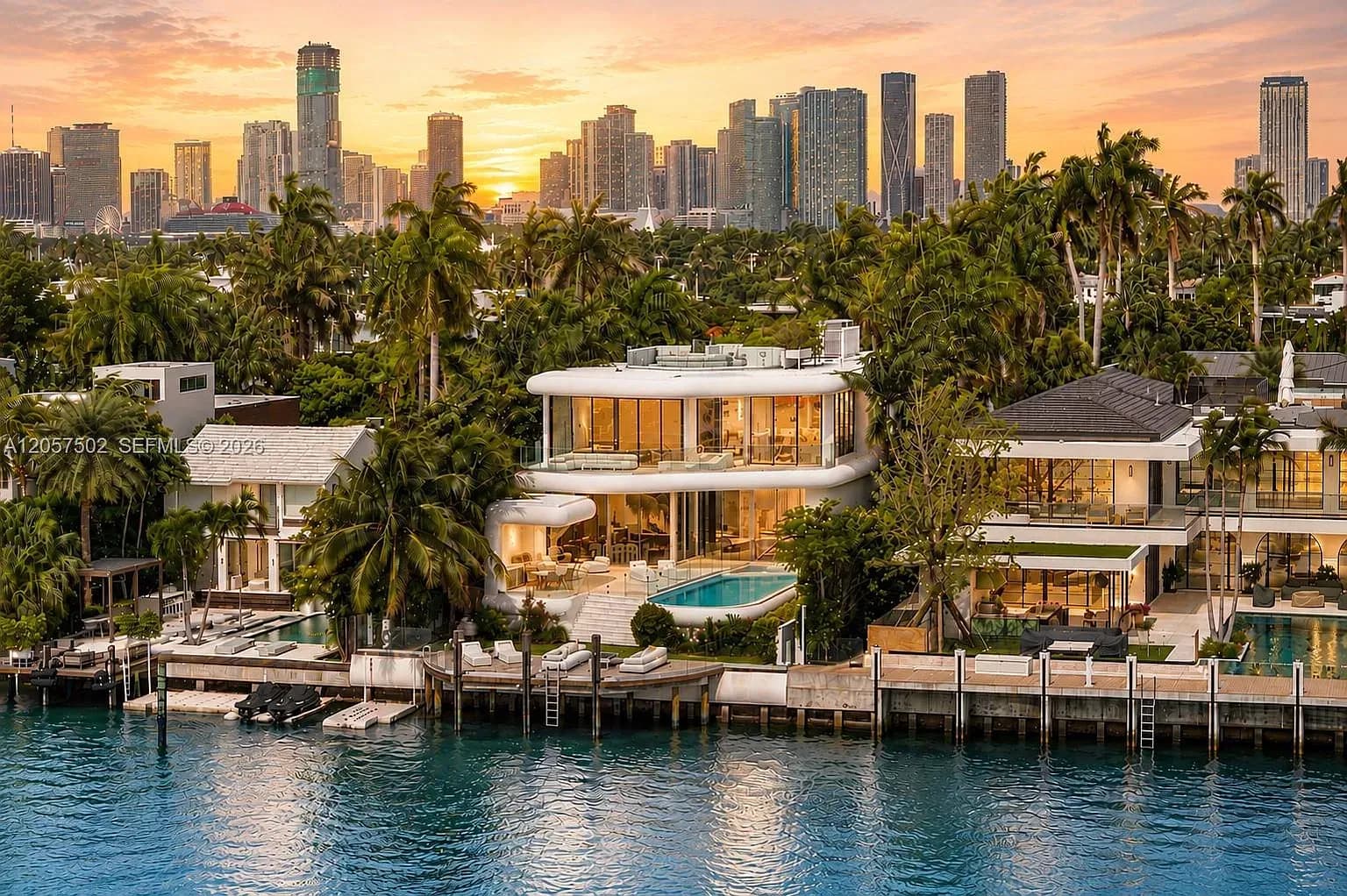
The Di Lido Island estate in Miami Beach is listed at $29 million. Six bedrooms, 6,942 square feet, built in 2018, on a 10,500-square-foot lot facing the bay and the Downtown Miami skyline.
Cost | Second home | Primary residence, new Florida resident |
|---|---|---|
Deed tax at closing (one time) | $174,000 | $174,000 |
Property tax, first full year | $544,043 | about $543,300 |
Property tax as a share of price | 1.88% | 1.87% |
The property tax figures use the 2025 adopted Miami Beach rates, the latest complete set, and assume the house is assessed at its asking price. The primary residence column assumes a buyer moving to Florida, who gets the smaller exemption explained below. The two columns barely differ. The reason why is the most important thing to understand about Florida's homestead exemption at this price.
Florida's transfer tax at closing
Florida charges a documentary stamp tax when a deed is recorded. The statewide rate is 70 cents per $100 of the price, or 0.7%.
Miami-Dade is the exception. Residential sales there are taxed at 60 cents per $100. The county adds a 45-cent surtax on other property, but transfers of single-family homes are exempt from it. Condos count as single-family residences under the statute.
Property | County | Price | Deed tax |
|---|---|---|---|
Di Lido Island, Miami Beach | Miami-Dade | $29M | $174,000 |
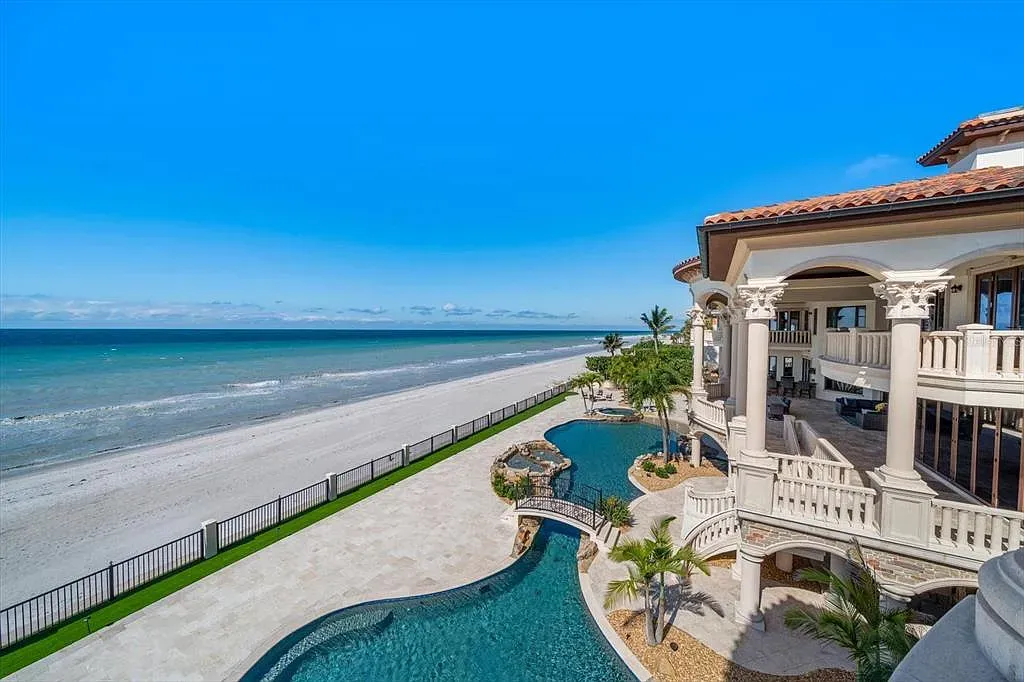
Sandcastle on the Gulf, Belleair Beach | Pinellas | $28.75M | $201,250 |
Lotus Edge, Boca Raton | Palm Beach | $4.5M | $31,500 |
Sandcastle costs $250,000 less than the Di Lido house and owes $27,250 more, because it sits outside Miami-Dade. The same $29 million sale anywhere else in Florida would owe $203,000.
That is still modest by Northeast standards. On a $15 million sale in Manhattan, buyer and seller together pay about $836,000 in transfer taxes. In Florida, the same price owes $90,000 to $105,000. Florida has no mansion tax, and the rate does not climb with the price. A financed purchase owes separate taxes on the mortgage on top of this.
Florida property tax rates on a luxury home
Like Texas, Florida stacks several local taxes on every property. Each is charged in mills, or dollars per $1,000 of taxable value. In Miami Beach, the 2025 rates add up to 18.76 mills:
Taxing authority | Mills |
|---|---|
Miami-Dade schools | 6.6330 |
City of Miami Beach (incl. debt) | 6.1339 |
Miami-Dade County (incl. debt) | 4.9911 |
Children's Trust and library | 0.7450 |
Water management and regional | 0.2571 |
Total | 18.7601 |
That is about $1.88 per $100 of taxable value. The City of Dallas comes to about $2.23 per $100. On a $10 million home, Miami Beach comes out about $35,000 a year cheaper. The proposed 2026 Miami Beach rates trim the total slightly, to about 18.67 mills.
The school district line is about a third of the Miami Beach bill. That matters for what follows, because Florida's new relief does not touch school taxes.
Amendment 3: why the bigger exemption barely moves the bill
A primary residence in Florida gets a homestead exemption: $25,000 off the value for all taxes, and about another $25,000 off for everything except school taxes. On the $29 million house, that saves about $770 a year.
Amendment 3 raises the non-school exemption to $150,000 in 2027 and $250,000 in 2028, indexed to inflation after that, according to the Florida Senate's analysis. School taxes stay at the $25,000 exemption.
At $250,000, the exemption on the Di Lido house would save a long-time Florida resident about $3,200 a year. That is about six-tenths of one percent of the bill.
It is the same pattern the Texas exemption shows. A fixed dollar amount means a lot to a $400,000 house and almost nothing to a $29 million one. And there is a catch for buyers moving to Florida: anyone who establishes residency on or after January 1, 2027, gets the old $50,000 non-school exemption and must wait until the fifth year for the larger one.
The cap that does matter: Save Our Homes
The relief that scales at the luxury end is the cap. Once a house is your homestead, its assessed value can rise no more than 3% a year, or the change in inflation if that is lower. Texas caps a homestead at 10%. Florida's cap is far tighter, and it applies to every tax on the bill, school taxes included.
Over time, that opens a wide gap. Say a $29 million house gains 6% a year in market value. After ten years it would be worth about $51.9 million, while its capped assessment would be about $39 million. At Miami Beach rates, the cap would be saving about $243,000 a year by then. That is an illustration, not a forecast, but it shows the size of the lever.
The cap belongs to the owner, not the house. After a sale, the property is reassessed at full value on the following January 1. A seller who has lived in the house for fifteen years may be paying tax on a fraction of the price, and the buyer will not inherit that bill.
Florida does let a homeowner carry some of the benefit to a new Florida home. Portability transfers up to $500,000 of the accumulated difference, if the new home is established within three tax years. On a long-held luxury home, the gap can be far larger than that. In the ten-year example above it would be about $13 million, so most of the benefit stays behind in a move.
Second homes: the new 5% limit
A second home gets no homestead exemption and no 3% cap. Until now, its value for non-school taxes could rise up to 10% a year. Amendment 3 lowers that to 5% starting in 2027.
For a part-time owner of a Gulf-front house like Sandcastle on the Gulf, this is the part of the amendment that actually moves the number. It covers the non-school taxes, roughly two-thirds of a Miami Beach bill. School taxes, about a third of the bill, stay uncapped on a second home and track the full assessment every year.
As with the old 10% limit, it resets on a sale. A new owner starts at full value.
Insuring a luxury home in Florida
Property tax in Florida is public and predictable. Insurance is neither.
The state-backed insurer of last resort, Citizens, cannot cover a home with a replacement cost above $700,000, or $1 million in Miami-Dade and Monroe counties. Every house in this piece is well above that, so the entire policy has to come from the private market.
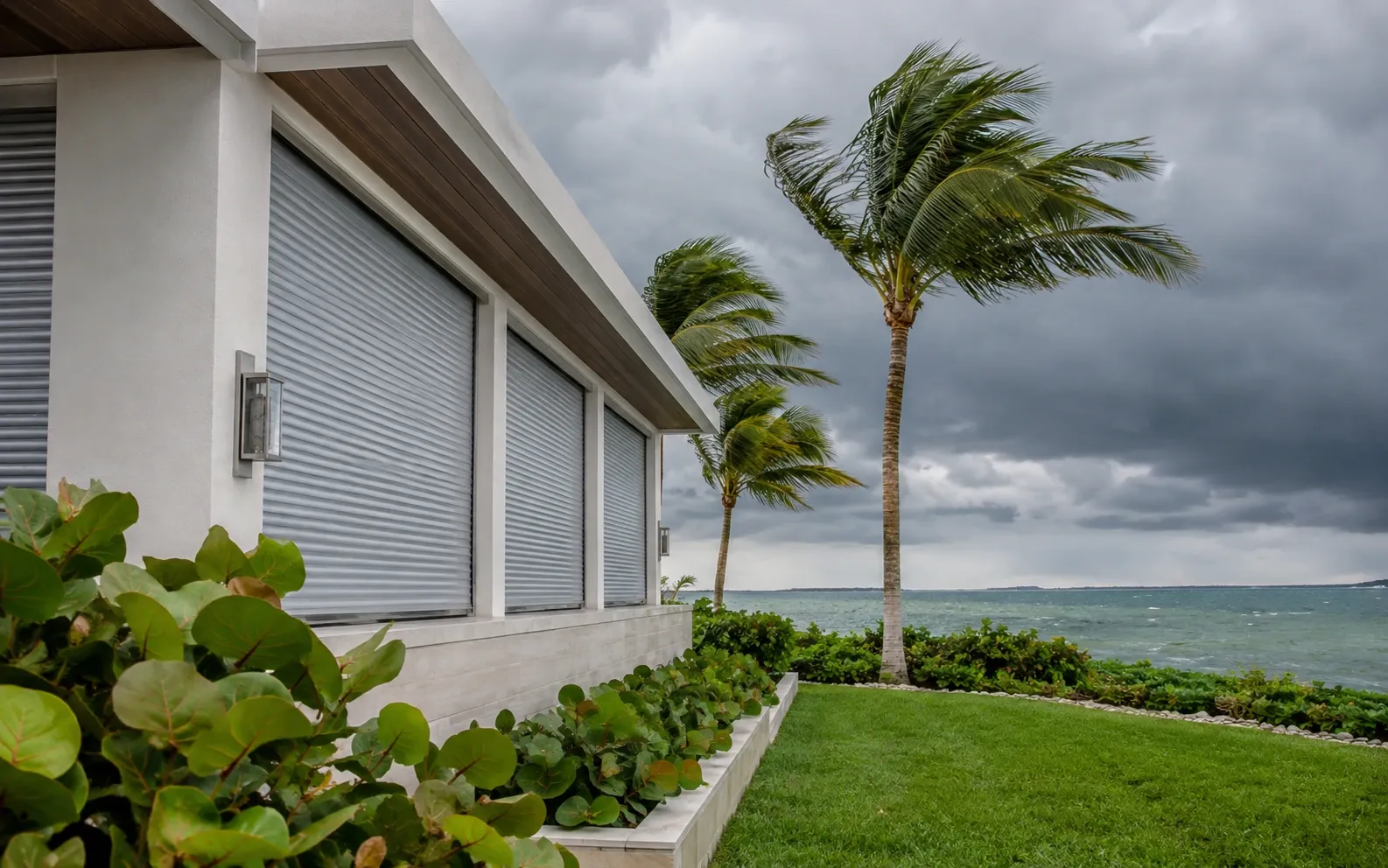
Flood is separate. Standard homeowners policies exclude it, and the federal flood program caps a single-family home at $250,000 for the building and $100,000 for contents. On a waterfront house worth tens of millions, the rest has to come from a private flood policy or excess coverage.
Premiums on a specific house are not public, and they can vary widely with elevation, construction, distance from the water and claims history. Get a written quote for wind and flood before the inspection period ends, not after closing. On coastal property, insurance belongs in the same line as the tax bill, and it is one of the first questions to ask about any waterfront estate.
Away from the coast
Inland Florida trades the insurance problem for a different question. Old St. Augustine Hills, near Tallahassee, sits on about 100 acres in the Red Hills, with two spring-fed bass ponds, orchards and wild quail.
Florida, like Texas, allows land in genuine agricultural use to be classified that way for tax purposes, which can lower its taxable value considerably. The listing does not say whether this property has the classification. On any acreage, ask the property appraiser for the current classification in writing before you price the taxes into an offer.
What to check before you buy
The county. The deed tax is lower in Miami-Dade, and the millage varies by city, county and special district. Look up the rates for the specific parcel.
Whether it will be your homestead. You need to own and live in the home on January 1, and file by March 1. The exemption is small at this price; the 3% cap is the real benefit.
When you became a Florida resident. Residency on or after January 1, 2027, means a five-year wait for the larger exemption.
The seller's tax bill is not yours. The assessment resets the January 1 after you buy. Estimate the tax at your price, not theirs.
Insurance, in writing, before you are committed. Wind and flood, with the private and excess layers priced.
Florida's real cost is not the closing. It is what the house costs to keep every year, and on the coast, what it costs to insure.
If you want the wildest homes on the internet in your inbox every week, free, join the newsletter.
This article is general information, not tax, insurance or legal advice. Rates, exemptions, caps and who pays can change and vary by property, so confirm the details for any specific purchase with a Florida real estate attorney, tax professional or insurance broker.
Frequently asked questions
How much is the transfer tax on a home in Florida?
Florida charges a documentary stamp tax of 70 cents per $100 of the price, or 0.7%, when the deed is recorded. Miami-Dade charges 60 cents per $100 on residential sales and exempts single-family homes and condos from its extra surtax. On a $29 million sale, that is $174,000 in Miami-Dade and $203,000 anywhere else in the state.
What does Florida’s Amendment 3 change?
Approved in November 2026, it raises the homestead exemption on non-school property taxes to $150,000 in 2027 and $250,000 in 2028, indexed to inflation after that. It also lowers the annual cap on non-school taxable value increases for second homes and other non-homestead property from 10% to 5%. School taxes keep the $25,000 exemption. Anyone who becomes a Florida resident on or after January 1, 2027, waits until the fifth year for the larger exemption.
Does the homestead exemption help on a luxury home?
Not much. Because it’s a fixed dollar amount, it saves a long-time resident about $3,200 a year on a $29 million Miami Beach home, even at the full $250,000 level. That is under 1% of the bill. The benefit that scales is the Save Our Homes cap, which limits a homestead’s assessed value increases to 3% a year or the rate of inflation, whichever is lower.
Does a buyer inherit the seller’s property tax bill in Florida?
No. After a sale, the home is reassessed at full value on the following January 1. A long-time owner’s capped assessment does not transfer to the buyer, so estimate the tax from your purchase price, not the seller’s current bill.
Can Citizens insure a luxury home in Florida?
No. Citizens, the state-backed insurer of last resort, can’t cover a home with a replacement cost above $700,000, or $1 million in Miami-Dade and Monroe counties. Luxury homes are insured in the private market. Flood is separate, and the federal flood program caps a single-family home at $250,000 for the building and $100,000 for contents. The rest needs a private or excess flood policy.
BallerCribs Weekly
Get the wildest luxury homes every week — free.
Free forever. Unsubscribe anytime.